


Main Takeaway: The best cold storage for Bitcoin is a hardware wallet that keeps the private keys offline for the full length of a Bitcoin holding, which tends to be measured in years. That points to three requirements: keys generated and stored on hardware with no live connection, a screen large enough to verify an address before funds move, and recovery on the open BIP39 standard so the setup outlives any single company. An air-gapped device like the ELLIPAL Titan 2.0 meets all three, signing by QR code with no cable or radio. This guide walks through the options for storing Bitcoin cold, where each fits, and how to move coins off an exchange without drama.
Quick reference
| Term | What it means |
|---|---|
| Cold storage | Holding Bitcoin with the private keys on an offline device, out of reach of remote attacks |
| Air-gapped | A wallet with no internet, Bluetooth, USB data, or NFC, communicating only by QR code |
| Self-custody | You hold the keys yourself instead of trusting an exchange to hold them |
| BIP39 | The industry-standard recovery phrase format. The same words restore your Bitcoin on any compatible wallet |
| Paper wallet | A printed key pair, an older cold storage method that modern hardware has largely replaced |
Why Bitcoin in particular belongs in cold storage
Bitcoin is the asset people hold longest. A typical BTC position is a multi-year commitment, often untouched between purchases, which changes the security question. A wallet that is online every day gives an attacker years of chances, while coins parked on an exchange depend on that company's solvency and security for the entire holding period, a bet the industry's history does not flatter. Cold storage matches the shape of Bitcoin ownership: keys that sit offline by default and come out only for the rare, deliberate transaction.
Bitcoin also makes cold storage simpler than it is for any other asset. There are no token approvals to manage and no smart contract permissions to revoke. Once the coins sit on addresses controlled by an offline device, the attack surface is close to nothing, which is exactly the point.
The options, honestly compared
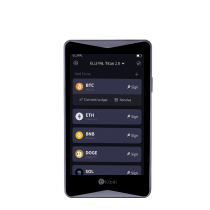
An air-gapped hardware wallet is the strongest fit for a Bitcoin holding. The keys are generated and stored on a device with no live connection of any kind, and transactions are signed offline. The ELLIPAL Titan 2.0 is the reference example: no Wi-Fi, no Bluetooth, no USB data, no NFC. The phone shows the unsigned transaction as a QR code, the device signs internally, and a signed QR goes back for broadcast. Nothing wired or wireless ever touches the keys. The mechanics are in our air-gapped signing explainer.
A connected hardware wallet, one that signs over USB or Bluetooth, also keeps keys off your computer and is a real upgrade over any software wallet. The tradeoff is that the connection is live while you sign, so you are relying on the secure element and on-device confirmation while plugged into the most exposed device you own. For coins that move once a year, paying that exposure at all is a choice worth questioning.
A paper wallet deserves a respectful mention and a clear retirement notice. Printing a key pair was the original cold storage, and it still keeps keys offline. Its problems are practical: generating the keys safely requires a clean offline computer most people do not have, spending safely is genuinely hard, and paper burns, fades, and gets thrown out. Modern hardware does the same job with fewer ways to fail.
An exchange account is not cold storage at all, whatever the marketing says. It is custody: the exchange holds the keys, and you hold a claim. Convenient for buying, wrong for holding, and the move from one to the other is covered below.
What the ELLIPAL Titan 2.0 brings to a Bitcoin holding
The ELLIPAL Titan 2.0 was built for the way Bitcoin is actually held. The keys are generated offline on the device and stay inside a certified secure element. The 4-inch color touchscreen shows the full receiving or destination address at a glance, which matters most on the rare day coins move: address verification is the one ritual standing between a Bitcoin holder and an irreversible mistake. The full-metal sealed casing is designed to wipe stored keys if the enclosure is forced open, so the device itself is not a soft target in a drawer. And recovery follows BIP39 with a 24-word phrase plus optional passphrase, so the setup survives the device, and even the company, being gone. Your Bitcoin restores on any compatible wallet.
ELLIPAL shipped the world's first air-gapped cold wallet in 2018 and has run the architecture across more than 1 million users in 140+ countries with zero breaches on the air-gapped line. Alongside Bitcoin, the same device covers 10,000+ tokens across 45+ chains, which matters the day a BTC-only holder stops being one.
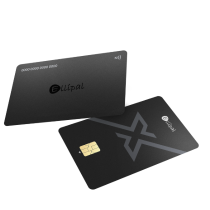
For the Bitcoin you actually spend, the ELLIPAL X Card puts cold storage in a 1.2mm NFC card that signs by tap, with keys in a CC EAL6+ secure element and the same BIP39 standard. The common Bitcoin setup uses both: Titan 2.0 for the stack, X Card for the sats that move. Titan guards the vault, the X Card rides with you.
Moving Bitcoin from an exchange to cold storage
- Set up the hardware wallet and write the recovery phrase on paper, offline. Verify the backup before funding anything. Our backup guide covers durable options.
- Generate a receiving address in the ELLIPAL App and verify it on the Titan 2.0 screen.
- Withdraw a small test amount from the exchange first, confirm it arrives, then move the rest.
- Leave it alone. The point of Bitcoin cold storage is that touching it is rare and deliberate.
- Check the written backup once or twice a year. The phrase, not the device, is what your Bitcoin ultimately lives on.
The full walkthrough, including exchange-side details, is in how to store crypto offline.
Which setup fits your Bitcoin
- "I hold BTC for the long term and rarely touch it." The Titan 2.0 as a pure vault: air-gapped keys, a 4-inch verification screen, and a sealed metal body built to sit in a safe for years.
- "I stack regularly and want the ritual simple." Same answer with a routine: a saved receiving address, verified on-device, and a small test on any new address.
- "I spend some Bitcoin day to day." Add the X Card for the moving sats, same app, same BIP39 standard.
- "I still keep coins on the exchange for convenience." Keep the trading float there if you must, and move the holding. The test transfer takes ten minutes.
FAQ
What is the best cold storage for Bitcoin?
A hardware wallet whose keys have no live connection, and for that the air-gapped model is the strongest fit: the ELLIPAL Titan 2.0 signs Bitcoin transactions by QR code with no cable or radio, verifies addresses on a 4-inch screen, and recovers through the open BIP39 standard. The right answer holds for one Bitcoin or a hundred. What scales is the discipline around