

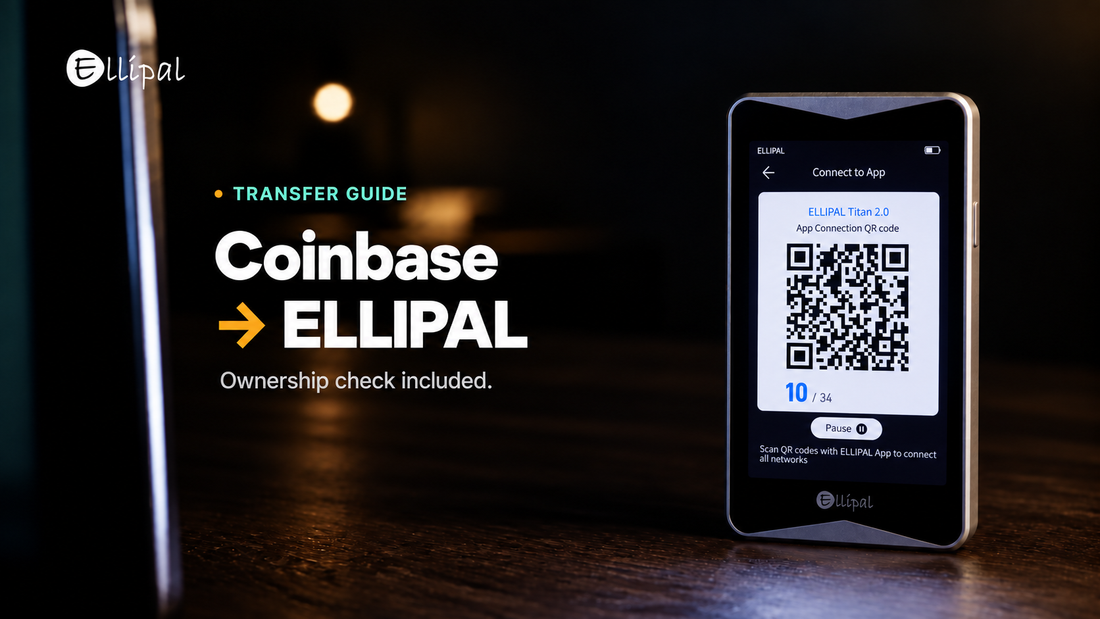
Main Takeaway: Moving crypto off Coinbase is one on-chain send: copy the receiving address from your ELLIPAL wallet, paste it into Coinbase's Send screen, confirm. What stalls people is ownership verification, because Coinbase verifies one address at a time, not the wallet behind it, and a new wallet cannot pass its small deposit test.
Quick Reference
| Small deposit test | Coinbase asks the destination wallet to send a set amount plus network fees. |
| Extended public key | A watch only key with no spending authority that still reveals an account's addresses and balances. |
| Memo or destination tag | Coinbase says tags and memos generally are not needed for a self-custody wallet. |
| Internal transaction | A transfer executed by a contract call, listed in its own block explorer tab. |
How do you transfer crypto from Coinbase to an ELLIPAL wallet?
You transfer crypto from Coinbase to an ELLIPAL wallet by sending an on-chain withdrawal to an address the ELLIPAL wallet generates. Coinbase holds the coins until that withdrawal confirms, which is when custody moves to you. Receiving needs no device action, because the address is public while the private key stays offline.
- In the ELLIPAL App, select the coin, tap Receive, and check the network matches Coinbase's.
- Copy the address, then compare its first and last four characters against the App.
- In Coinbase, select Send crypto, choose the asset, and paste the address.
- Enter the amount, reading the next section first if the device is new.
- Clear any verification Coinbase asks for, submit, then move the rest once the balance appears.
Why Coinbase asks you to verify the same wallet twice
Coinbase may ask you to prove you own the destination before releasing a self-custody withdrawal. You pass, and a later withdrawal asks again for the same wallet.
Coinbase verifies a single address, not a wallet. Its small deposit test page says certain blockchains like Bitcoin "may automatically update or rotate your wallet addresses for privacy", and that verifying one means "the verification will only apply to that address". A new device meets a harder version: the test asks the destination wallet to send a specific amount, and Coinbase states "The wallet needs to cover the amount required for the test deposit and applicable network fees". An empty wallet covers neither, and incomplete tests expire after 48 hours.
Coinbase offers two ways out, and both cost you something. You can keep sending to the one verified address in your confirmation email, which means reusing an address. Or you can select "Skip future verifications on this wallet" and submit your extended public key, which still requires that first test deposit. Handing one to an exchange is a real privacy tradeoff. Either way, fund the device from another source first, so the test deposit has something to spend.
Which situation matches yours
- Your first send goes to a new device. Fund it from another source first, because the test deposit spends from that wallet.
- An ETH withdrawal reads complete and your wallet shows nothing. Coinbase batches sends, so it can arrive as an internal transaction, shown in its own Etherscan tab.
- You are sending XRP to a new address. The XRP Ledger documents a 1 XRP base reserve, so a smaller first payment fails on-chain.
- You are in the EU or UK, sending to another exchange. Coinbase supports only a select list of Crypto Asset Service Providers, with a self-hosted wallet as the fallback.
Where the ELLIPAL wallet fits
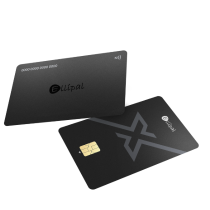
An ELLIPAL wallet is the end of the journey, and nobody else holds the coins once they arrive. The ELLIPAL Titan 2.0 is a cold wallet with no Bluetooth, no WiFi and no USB data connection, so transactions travel by QR code and signing happens on the device. The ELLIPAL X Card is an NFC cold wallet in card form, with no battery and no port, signed by tapping it to your phone. Different tools. Same mission. On both, private keys are generated and stored offline inside a secure chip, and the seed phrase follows the BIP39 standard that most wallets read, so recovery works elsewhere. More on where your crypto actually lives.
FAQ: Coinbase Withdrawals and Cold Storage
Is it safe to transfer crypto from Coinbase to a hardware wallet?
An on-chain send to your own address is a standard withdrawal, and the address is where the care goes. ELLIPAL documents the common receiving issues.
How much does it cost to move crypto off Coinbase?
The cost is the network fee quoted on the Send screen. Coinbase's fees page notes the final fee "may differ from the estimated fee due to factors such as batching transactions".
Is Coinbase Wallet the same as my Coinbase account?
No. Coinbase describes that product as self-custody, says it "is not the same product as Coinbase", and now files its help pages under Base.
What happens to my crypto if I lose the ELLIPAL device?
Your coins are recorded on the blockchain, and the device holds only the key that signs for them. The seed phrase from setup restores the same accounts on a replacement, so that backup is the part to protect.
About ELLIPAL
ELLIPAL has built cold wallets since 2018, with more than 1 million users across 140+ countries and support for 10,000+ tokens across 45+ chains.
Own it. Then use it.
Security note: no self custody setup removes every risk, and this article is educational rather than financial advice. ELLIPAL is a self custody hardware wallet provider that holds no customer funds, gives no investment advice and does not guarantee returns. It is not affiliated with Coinbase. Buying, swapping and staking services are run by independent third parties, and availability varies by region, asset and provider.