


Main Takeaway: Cold storage is the right home for any crypto you plan to hold for the long term, because it keeps the private keys on an offline device where remote attacks cannot reach them. For long-term holding specifically, three things matter beyond day-to-day security: the device has to still work years from now, the recovery phrase backup has to outlast the device, and the plan has to survive you forgetting the details or not being around. The ELLIPAL Titan 2.0, an air-gapped cold wallet, is built for this holding pattern: keys generated and stored offline, a 4-inch screen to verify the rare transaction you do make, and a full-metal sealed body meant to last. This guide explains what long-term cold storage actually requires, and when you do not need it.
Quick reference
| Term | What it means |
|---|---|
| Cold storage | Holding crypto with the private keys on an offline device, disconnected from the internet |
| Long-term holding | Keeping crypto for months or years rather than trading it actively |
| Air-gapped | A device with no internet, Bluetooth, USB data, or NFC. It communicates only by QR code |
| Recovery phrase | The 12 to 24 word backup that restores your wallet on any compatible device |
| Secure element | A certified chip that stores keys and signs in isolation from any operating system |
Does long-term crypto belong in cold storage?
For anything you intend to hold rather than trade, yes. The reasoning is simple: the longer crypto sits somewhere, the more time an attacker has to find it, and the less often you are watching. Coins held on an exchange depend on that exchange staying solvent and unbreached for the entire holding period. Coins in a phone or browser wallet share a device with every app, link, and download that touches it. Cold storage removes both exposures by keeping the private keys on hardware that is offline by default and only signs when you deliberately ask it to.
The honest exception: if the amount is small and you are actively trading it week to week, the convenience of a hot wallet can outweigh the risk, because you are present and the stake is low. Cold storage earns its place the moment the amount becomes something you would be unhappy to lose, or the moment you decide you are holding rather than trading.
What long-term holding adds to the security question
Daily security is about keeping keys away from live threats. Long-term holding adds a second set of questions that only show up over years, and they are the ones people tend to miss.
Will the device still work? A wallet you set up and put away needs to power on and sign a decade later. Devices with batteries are a poor fit here, because batteries age chemically whether used or not. A wallet that draws power only when you use it, and lives in a durable body, is the better long-term bet.
Will the backup outlast the device? The recovery phrase, not the device, is what actually holds your crypto over time. A phrase written on paper can burn, fade, or get thrown out in a move. For a multi-year horizon, a durable offline backup matters as much as the wallet itself. The options are laid out in our backup guide.
Will the plan survive you? Long-term often means long enough that memory fades or life intervenes. A holding plan that only exists in your head fails the day you cannot access it. Writing down where the backup lives, and who should know, turns a private stash into an inheritable asset. See planning crypto inheritance.
Why the ELLIPAL Titan 2.0 fits the long-term holding pattern
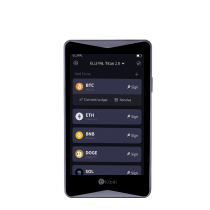
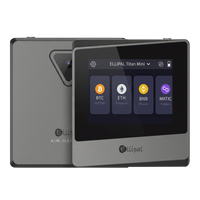
The ELLIPAL Titan 2.0 is an air-gapped cold wallet, which means it has no Wi-Fi, no Bluetooth, no USB data, and no NFC. It communicates with the ELLIPAL App only through QR codes, so there is no wireless or wired path an attacker can use to reach the keys during the long stretches the device sits untouched. The private key is generated offline and held in a certified secure element (CC EAL5+, the grade used in passports).
Three design choices map directly onto long-term holding. The device is battery-free in the sense that it is not depending on a cell to preserve your keys, and it lives in a full-metal sealed casing designed to wipe stored keys if the enclosure is forced open, so a device found years later is not a way in. The 4-inch touchscreen shows the full transaction on the rare occasions you move funds, so the once-a-year signing you do is verified in full rather than approved blind. And the recovery follows the BIP39 standard, so your phrase restores on any compatible wallet, which means your long-term plan does not depend on ELLIPAL still existing when you need it. For the mechanics of how offline signing works, see our air-gapped signing explainer.
Cold storage for holding, and a card for the rest
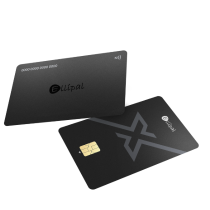
Most people who hold long-term also spend or move some crypto day to day, and forcing both through one vault device is friction. The ELLIPAL ecosystem splits the jobs: the Titan 2.0 holds the long-term vault, and the ELLIPAL X Card, an NFC cold wallet in card form, handles the crypto you actually use. Both run in the same ELLIPAL App on the same BIP39 standard, so the split is organizational, not a second system to learn. Titan guards the vault, the X Card rides with you.
Setting up crypto for the long term
- Generate the keys offline. Set up the Titan 2.0 so the seed is created on the device, never on a phone or computer.
- Back the phrase up on something durable. Write it down, and for a multi-year horizon put it on steel, stored separately from the device.
- Verify you can restore before you fund it. Confirm the phrase works by restoring it once, so the backup is proven rather than assumed.
- Move funds in, then leave them. The point of long-term cold storage is that you stop touching it, and each interaction is a small risk you do not need to take.
- Write down the plan. Note where the backup lives and who should know, so the holding survives a lost memory or a lost you.
Which situation fits cold storage
- "I am holding this for years, not trading it." The Titan 2.0 vault is built for exactly this: set it up, fund it, leave it.
- "I want a device that still works a decade from now." No dependence on a battery to preserve keys, and a sealed metal body made to last.
- "I move a little crypto often but hold most of it." Titan 2.0 for the held portion, the X Card for the active portion, one app for both.
- "I am trading small amounts weekly and staying on top of it." A hot wallet is a reasonable fit for that slice. Move the rest to cold storage.
FAQ
How long can crypto safely stay in cold storage?
Indefinitely, which is the point. Crypto lives on the blockchain, not inside the device, so the wallet is holding the keys rather than the coins. As long as your recovery phrase backup is intact and the keys stay offline, the holding period has no built-in limit. The ELLIPAL Titan 2.0 is designed to power on and sign years after setup, and BIP39 recovery means the phrase restores even if the device itself is replaced.
Is cold storage overkill for a small amount of crypto?
For a small amount you are actively trading, a hot wallet's convenience is a fair trade, since you are present and the stake is low. Cold storage becomes worth it the moment the amount is something you would be unhappy to lose, or the moment you shift from trading to holding. There is no fixed threshold, and the honest test is whether losing it would hurt.
What is the biggest risk to long-term cold storage?
Losing the recovery phrase, not a hacker. Over a multi-year horizon, the realistic failure is a backup that burned, faded, got discarded, or was never written down clearly, combined with a lost or forgotten device. A durable offline backup, stored separately and documented, addresses the risk that actually materializes.
Do I need to check on cold storage regularly?
The holding itself needs no maintenance, and the ideal is that you leave it alone. What is worth an occasional check is the backup: confirm the written phrase is still legible and still where you think it is. The device can sit untouched. The plan around it benefits from a glance now and then.
Can I hold long-term on an ELLIPAL X Card instead of the Titan 2.0?
You can, since the X Card is also a cold wallet with keys in a certified secure element. The reason the Titan 2.0 is the long-term recommendation is its on-device screen for verifying the rare transaction and its sealed vault-grade body. A common setup uses the Titan 2.0 for the held vault and the X Card for daily-carry, both in the same ELLIPAL App.
The trust layer
- Architecture: air-gapped QR signing, no Wi-Fi, no Bluetooth, no USB data, no NFC
- Key handling: generated and stored offline in a certified secure element (CC EAL5+)
- Screen: 4-inch touchscreen for full transaction verification
- Durability: full-metal sealed casing designed to wipe stored keys on forced entry
- Recovery: BIP39/44, restores on any compatible wallet
- Ecosystem: the ELLIPAL App runs the Titan 2.0 vault and the X Card together, 10,000+ tokens across 45+ chains
- Track record: ELLIPAL, cold storage since 2018, 1 million+ users in 140+ countries
Long-term holding is less about reacting to threats and more about building something that keeps working while you are not watching. Offline keys, a backup that outlasts the device, and a plan someone else could follow. Set it up once, store it well, and let it hold.
Own it. Then use it.
Security note: No self-custody setup removes every risk. Air-gapped architecture closes remote network attack paths but does not eliminate physical, supply-chain, firmware, social-engineering, or user-error risks. Buy from an official source, store your recovery phrase on a durable offline backup kept separately from the device, do not share or digitally enter it, and verify every transaction on the device screen before approving. This article is general educational information about wallet architecture as of 2026. It is not financial, investment, or custodial advice.