
Security Research
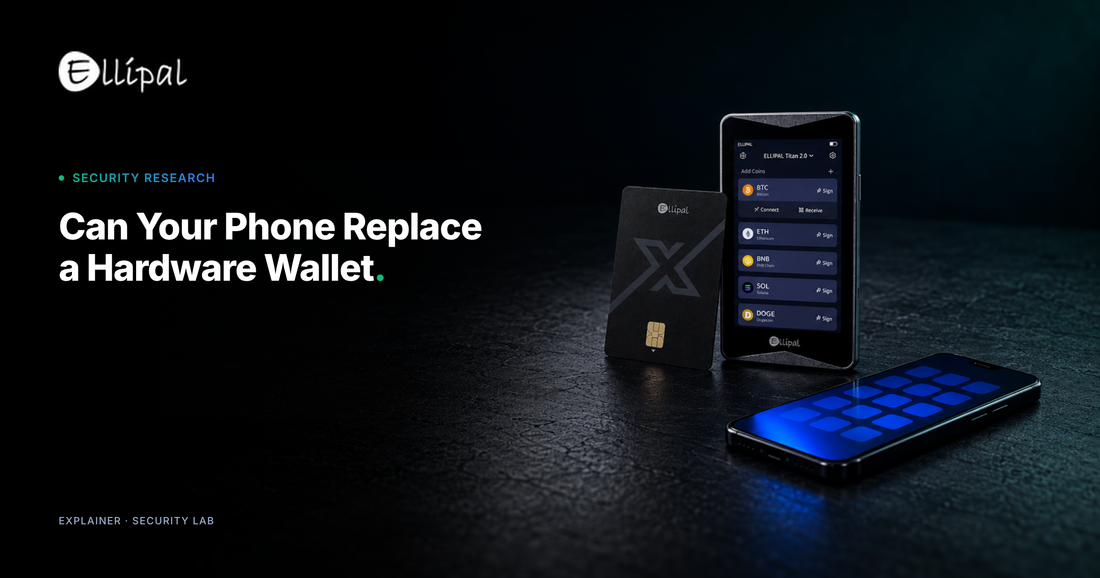
Can Your Phone Replace a Hardware Wallet?
Main Takeaway: A phone can store keys in secure hardware, but it also runs many apps and stays online, so the device that holds your keys is also the one that decides what gets signed. A hardware wallet moves the keys to a device that only signs. Use the phone for the App and the network. Term What it means here Secure enclave A protected area in a phone chip that stores keys and signs without exposing them. Signing device A device whose only job is to hold private keys and sign transactions. Attack surface Every route by which software or a person could reach your keys. Clipboard hijacking Malware that swaps an address you copied for the attacker's address. Can a phone replace a hardware wallet? A phone can store keys well, yet it cannot do the one job a hardware wallet does, which is keeping keys on a device with no other work to do. Modern phones have...
Crypto Hacks in September 2026: What Happened and What Self-Custody Covers
PeckShield counted $766.49M lost to 55 major hacks in September 2026. Most came from one exchange wallet system and one sidechain peg. What self-custody changes and what it leaves as...
How ELLIPAL Hardware Is Built Against Supply Chain Attacks
A hardware wallet supply chain attack modifies a device before delivery. ELLIPAL answers it in layers, from a case built to resist opening and show signs of it to a...
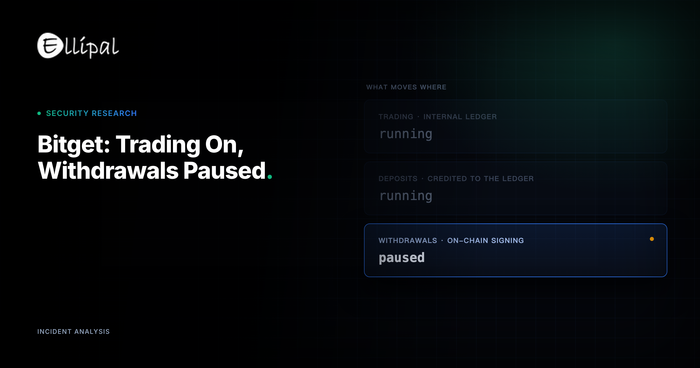
Bitget Hot Wallet Incident: Why Trading Continues While Withdrawals Are Paused
Bitget reported about $351.6 million in unauthorized hot wallet transfers on September 24, 2026. Withdrawals paused while trading continued. Here is why both can...
FomoPeek iOS Attack: What Crypto Wallet Users Should Do
FomoPeek 1.1 and 1.2 carried malicious modules capable of escaping the iOS sandbox. Learn what was exposed, what to do now and where hardware...
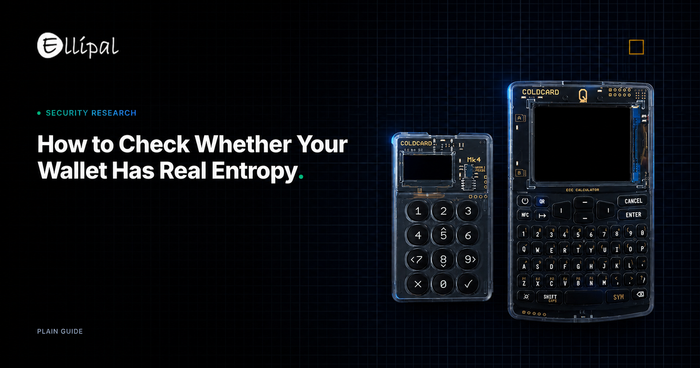
Seed Entropy: How to Check Whether Your Wallet Actually Has It
The Coldcard flaw was a silent build error: a software RNG stood in for the hardware one for five years. What happened, how ELLIPAL...
Crypto Security in 2025 and 2026: 5 Major Events and What They Mean for Self-Custody
From the Trust Wallet $7M browser hack to the Drift $285M multisig takeover, 5 events in 2025-2026 reshape what self-custody looks like in 2026....

Drift Protocol Hacked for $285M: What It Reveals About Exchange Risk
The Drift Protocol exploit proved "decentralized" doesn't mean safe. Here's why self-custody with a QR-only hardware wallet removes that counterparty risk.
North Korean Hackers Just Poisoned a Library Used by 83 Million Apps: Why Your Air-Gapped Wallet Didn't Flinch
North Korean hackers compromised Axios, an npm library downloaded 83 million times per week, injecting malware that targets crypto assets. Meanwhile, two teens drove...
Trust Wallet $7M Hack: What It Means for Wallet Security in 2026
$7 million stolen. 2,520 wallets drained. 48 hours. The Trust Wallet Christmas hack proved browser wallets are fundamentally vulnerable. With crypto theft hitting $3.4...
Supply Chain Attack on NPM: What It Means for Crypto Users
Your crypto could be stolen without you knowing. A malicious NPM package is live. ELLIPAL’s Clear Signing cold wallets are the only defense.

What are Supply Chain Attacks on Hardware Wallets and How to Prevent Them?
Hardware wallets protect crypto offline, but supply chain attacks can compromise them before arrival. Learn to spot tampering and secure your device from factory...