
Recherche en sécurité
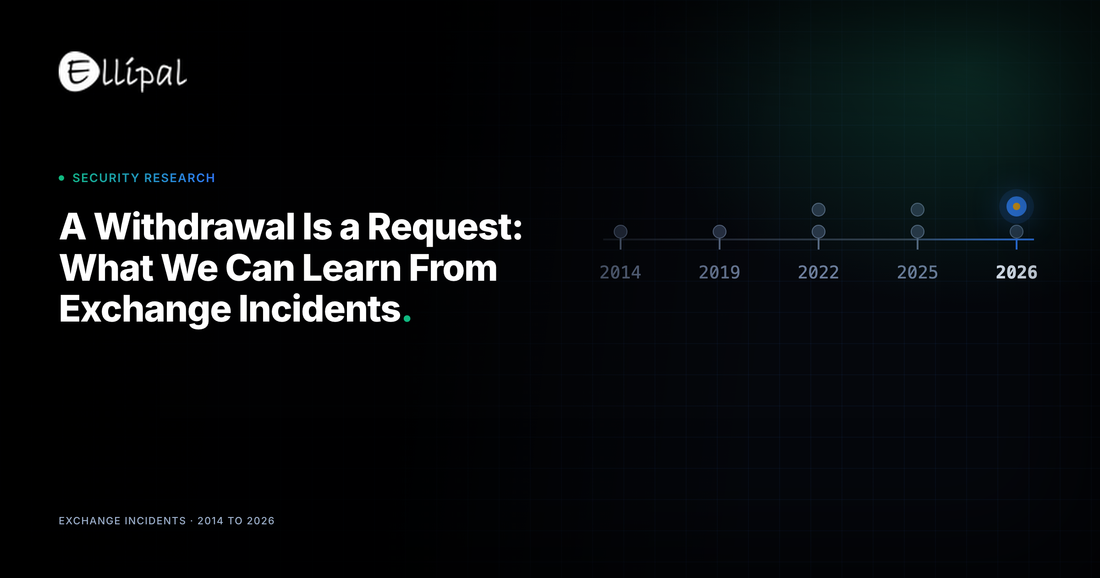
A Withdrawal Is a Request: What We Can Learn From Exchange Incidents
Main Takeaway: A balance on an exchange is a record in the exchange's ledger, and taking coins out is a request the exchange has to approve. From Mt. Gox in 2014 to Binance in October 2026, exchange incidents have followed a few repeating patterns, and in most of them users waited on the platform's decision to get their coins back. Self-custody moves the keys, and the work of protecting them, to you. What does an exchange balance actually represent? When you buy crypto on an exchange, the coins usually sit in wallets the exchange controls, alongside everyone else's. Your account shows your share as an entry in the exchange's own database. Coins only leave when you ask for a withdrawal and the exchange signs a transaction from one of its wallets. That step depends on the exchange's systems, policies and solvency on the day you ask. Our guide on where your crypto is actually stored covers the mechanics in more...
Can Your Phone Replace a Hardware Wallet?
A phone can store keys, but it also runs many apps and stays online. Here is what a hardware wallet separates from the phone, and what it does not cover,...
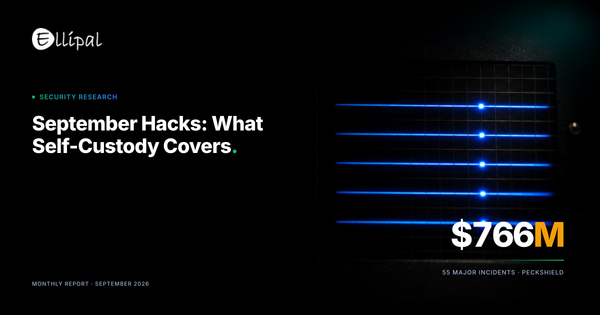
Crypto Hacks in September 2026: What Happened and What Self-Custody Covers
PeckShield counted $766.49M lost to 55 major hacks in September 2026. Most came from one exchange wallet system and one sidechain peg. What self-custody changes and what it leaves as...

How ELLIPAL Hardware Is Built Against Supply Chain Attacks
A hardware wallet supply chain attack modifies a device before delivery. ELLIPAL answers it in layers, from a case built to resist opening and...
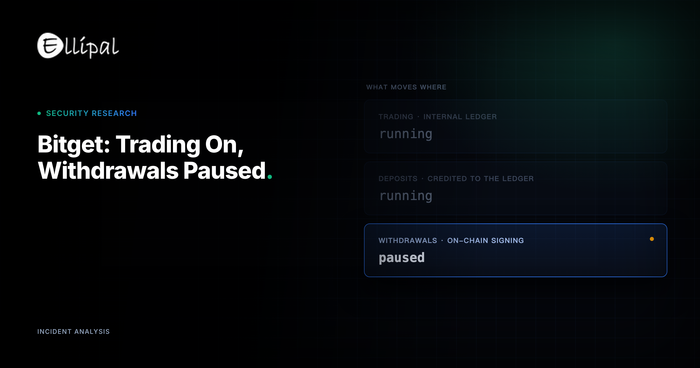
Bitget Hot Wallet Incident: Why Trading Continues While Withdrawals Are Paused
Bitget reported about $351.6 million in unauthorized hot wallet transfers on September 24, 2026. Withdrawals paused while trading continued. Here is why both can...
FomoPeek iOS Attack: What Crypto Wallet Users Should Do
FomoPeek 1.1 and 1.2 carried malicious modules capable of escaping the iOS sandbox. Learn what was exposed, what to do now and where hardware...
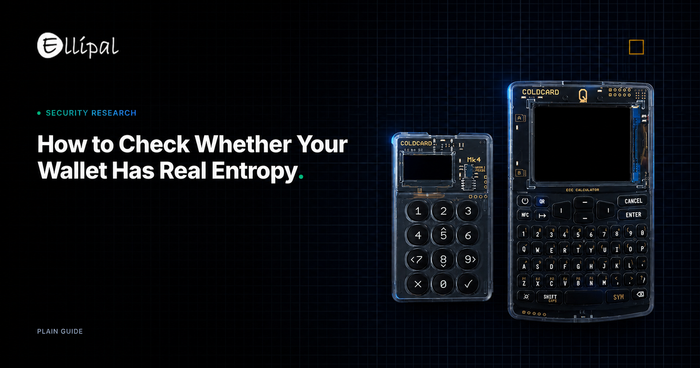
Entropie de la phrase de récupération : comment vérifier que votre portefeuille en possède réellement
La faille de Coldcard était une erreur de compilation silencieuse : un générateur de nombres aléatoires logiciel a remplacé celui du matériel pendant cinq...

La sécurité des cryptomonnaies en 2025 et 2026 : 5 événements majeurs et ce qu’ils signifient pour l’auto-garde
Du piratage à 7 millions de dollars du navigateur de Trust Wallet à la prise de contrôle du portefeuille multisignature de Drift pour 285...

Le protocole Drift piraté pour 285 millions de dollars : ce que cela révèle sur les risques liés aux plateformes d’échange
L’exploit du protocole Drift a prouvé que « décentralisé » ne signifie pas sans danger. Voici pourquoi l’auto-garde avec un portefeuille matériel isolé du...
Des hackers nord-coréens viennent d’empoisonner une bibliothèque utilisée par 83 millions d’applications : pourquoi votre portefeuille isolé du réseau n’a pas bronché
Des pirates informatiques nord-coréens ont compromis Axios, une bibliothèque npm téléchargée 83 millions de fois par semaine, en y injectant un logiciel malveillant qui...
Piratage de Trust Wallet de 7 millions de dollars : ce que cela signifie pour la sécurité des portefeuilles en 2026
7 millions de dollars volés. 2 520 portefeuilles vidés. 48 heures. Le piratage de Trust Wallet à Noël a prouvé que les portefeuilles accessibles...
Attaque de la chaîne d’approvisionnement sur NPM : ce que cela signifie pour les utilisateurs de cryptomonnaies
Vos cryptomonnaies pourraient être volées à votre insu. Un paquet NPM malveillant est actuellement actif. Les portefeuilles hors ligne à signature transparente d’ELLIPAL sont...