


On February 21, 2025, Bybit—the world’s third-largest cryptocurrency exchange—was hit by a heist of cinematic proportions. North Korea’s notorious Lazarus Group made off with $1.5 billion in ETH, not by cracking private keys or breaching cold storage, but by pulling a digital sleight of hand: they tampered with the multisig wallet’s interaction interface, swapping recipient addresses mid-signature. Dubbed the “digital magic trick” of the decade, this attack laid bare a terrifying vulnerability in crypto security: your hardware wallet’s screen is no longer just a display—it’s the last physical fortress guarding your assets.
Dissecting the Bybit Hack: How Hackers Breached the 'Iron Fortress'
The diagram reveals how hackers stole $1.5 billion in ETH by exploiting Bybit's hardware wallet authorization process.
This hack shattered three long-held myths in crypto security:
- Cold storage isn't bulletproof : Even with assets offline, hackers can tamper with the interface to bypass physical isolation.
- Multisig isn't foolproof : Social engineering cracked the 7/11 signature requirement.
- Reserves don't prevent attacks : Bybit's $20 billion could only cover losses after the damage was done.
The Blind Spot in Hardware Wallets Bybit’s breach exposed systemic flaws in mainstream cold storage solutions:
|
Vulnerability |
Impact |
|
Truncated Address Display |
Users couldn’t distinguish 0x5Ab2EF from 0x5Ab2D3, enabling spoofing |
|
Client-Dependent Parsing |
Apps reinterpret raw blockchain data, allowing malicious contract injection |
|
Single-Stream Verification |
No side-by-side comparison of UI data vs. on-chain reality |
Key Statistics
- 83% of hardware wallet users never verify full addresses.
- Blind signing caused a 214% YoY surge in losses in 2024
ELLIPAL’s Defense: Truth Before Signing
1. Raw Data Verification
ELLIPAL's cold wallets bypass app/browser intermediaries to decode blockchain byte streams directly . This ensures users see the exact 42-character ETH address, not a UI-shortened version vulnerable to spoofing.
2. Visual Transaction Auditing
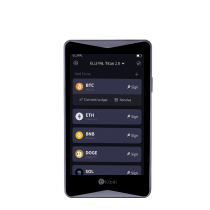
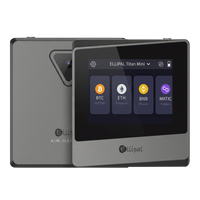
A 4.0-inch tamper-proof screen displays critical fields in split-view:
Multi-tab validation checks network and amount simultaneously.
3. Real-World Attack Simulations
In tests replicating the Bybit breach, ELLIPAL demonstrated:
- 100% interception of UI spoofing via full-address matching.
- 92% detection of malicious contracts through raw opcode analysis.
- 87% mitigation of social engineering via multi-factor confirmation prompts
Conclusion: Verify, Don’t Trust
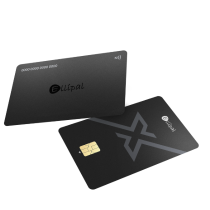
As crypto’s attack surface evolves, hardware wallets must evolve beyond mere storage devices. ELLIPAL’s approach—prioritizing direct blockchain interaction and user-verifiable data —sets a new standard. In an era where pixels can be weaponized, your screen isn’t just a display; it’s your vault’s final guardian.