
Beveiligingsonderzoek
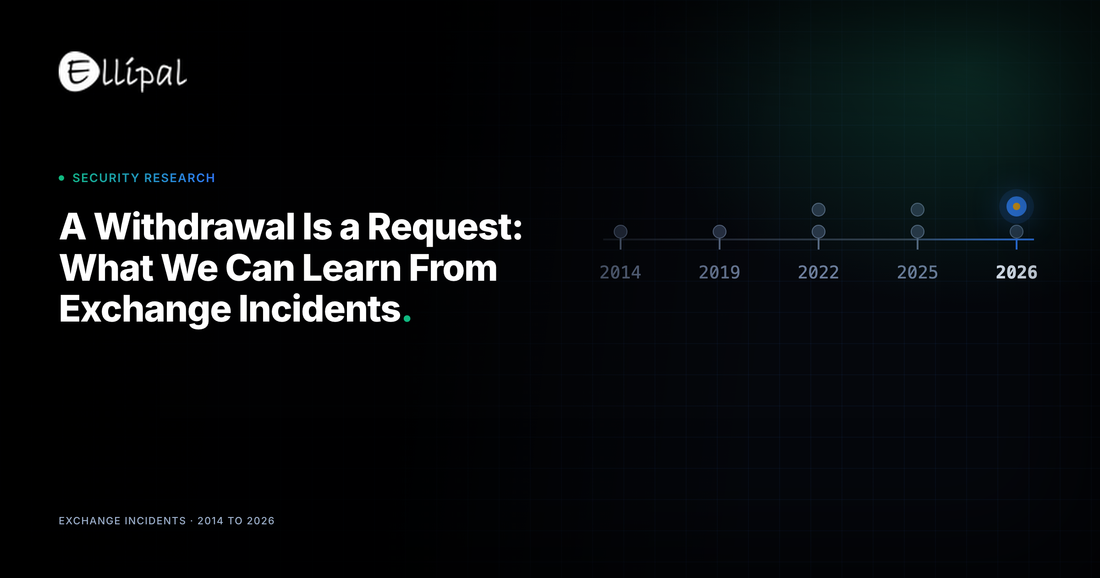
A Withdrawal Is a Request: What We Can Learn From Exchange Incidents
Main Takeaway: A balance on an exchange is a record in the exchange's ledger, and taking coins out is a request the exchange has to approve. From Mt. Gox in 2014 to Binance in October 2026, exchange incidents have followed a few repeating patterns, and in most of them users waited on the platform's decision to get their coins back. Self-custody moves the keys, and the work of protecting them, to you. What does an exchange balance actually represent? When you buy crypto on an exchange, the coins usually sit in wallets the exchange controls, alongside everyone else's. Your account shows your share as an entry in the exchange's own database. Coins only leave when you ask for a withdrawal and the exchange signs a transaction from one of its wallets. That step depends on the exchange's systems, policies and solvency on the day you ask. Our guide on where your crypto is actually stored covers the mechanics in more...
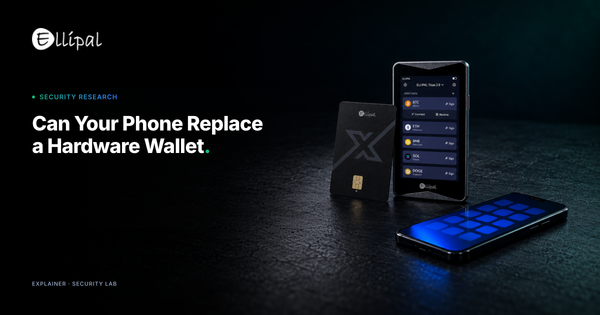
Can Your Phone Replace a Hardware Wallet?
A phone can store keys, but it also runs many apps and stays online. Here is what a hardware wallet separates from the phone, and what it does not cover,...
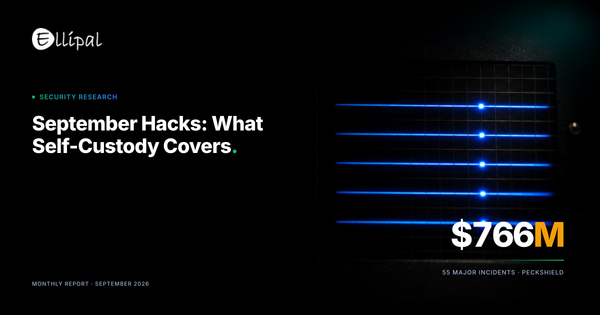
Crypto Hacks in September 2026: What Happened and What Self-Custody Covers
PeckShield counted $766.49M lost to 55 major hacks in September 2026. Most came from one exchange wallet system and one sidechain peg. What self-custody changes and what it leaves as...

How ELLIPAL Hardware Is Built Against Supply Chain Attacks
A hardware wallet supply chain attack modifies a device before delivery. ELLIPAL answers it in layers, from a case built to resist opening and...
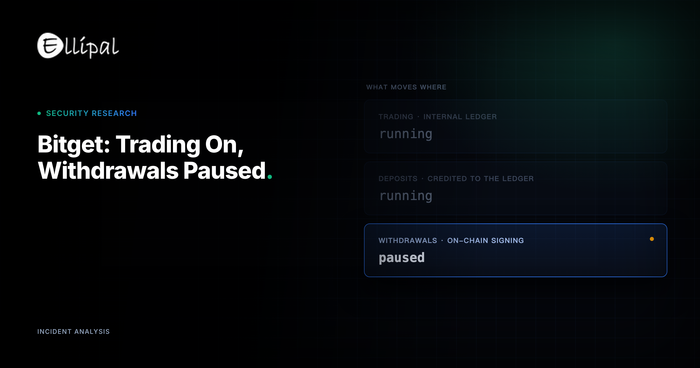
Bitget Hot Wallet Incident: Why Trading Continues While Withdrawals Are Paused
Bitget reported about $351.6 million in unauthorized hot wallet transfers on September 24, 2026. Withdrawals paused while trading continued. Here is why both can...
FomoPeek iOS Attack: What Crypto Wallet Users Should Do
FomoPeek 1.1 and 1.2 carried malicious modules capable of escaping the iOS sandbox. Learn what was exposed, what to do now and where hardware...
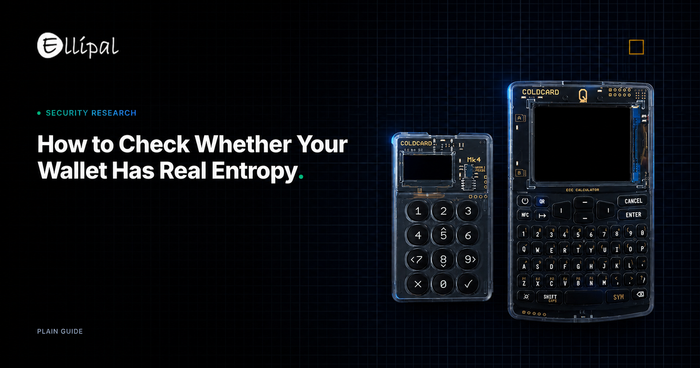
Entropie van de seed: hoe je controleert of je wallet die daadwerkelijk heeft
De kwetsbaarheid in Coldcard was een stille buildfout: vijf jaar lang verving een softwarematige RNG de hardwarematige RNG. Wat er gebeurde, hoe ELLIPAL willekeur...
Cryptobeveiliging in 2025 en 2026: 5 belangrijke gebeurtenissen en wat ze betekenen voor zelfbeheer
Van de browserhack van Trust Wallet ter waarde van $7 miljoen tot de overname van de Drift-multisig ter waarde van $285 miljoen: 5 gebeurtenissen...

Drift Protocol gehackt voor $285 miljoen: wat dit onthult over het risico van exchanges
De exploit van het Drift Protocol bewees dat ‘gedecentraliseerd’ niet betekent dat iets veilig is. Dit is waarom zelfbeheer met een air-gapped hardwarewallet de...
Noord-Koreaanse hackers hebben zojuist een bibliotheek vergiftigd die door 83 miljoen apps wordt gebruikt: waarom je air-gapped wallet niet reageerde
Noord-Koreaanse hackers hebben Axios gecompromitteerd, een npm-bibliotheek die 83 miljoen keer per week wordt gedownload, en malware geïnjecteerd die gericht is op cryptoactiva. Ondertussen...
Trust Wallet-hack van $7 miljoen: wat dit betekent voor walletbeveiliging in 2026
$7 miljoen gestolen. 2.520 wallets leeggehaald. 48 uur. De kersthack van Trust Wallet bewees dat browserwallets fundamenteel kwetsbaar zijn. Nu cryptodiefstal in 2025 $3,4...
Supplychainaanval op NPM: Wat het betekent voor cryptogebruikers
Je crypto kan worden gestolen zonder dat je het merkt. Er is een kwaadaardig NPM-pakket actief. De cold wallets van ELLIPAL met Clear Signing...