
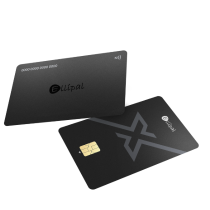
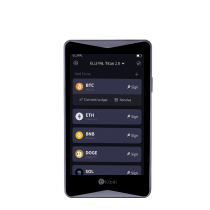

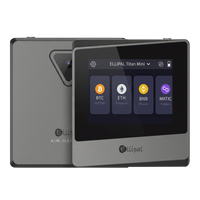

The ELLIPAL Titan 2.0 is an air-gapped cold wallet: private keys live on a sealed device with no USB data connection, no Bluetooth and no WiFi, and transactions are signed by scanning QR codes. Ledger wallets keep keys on a secure chip and connect by USB-C or Bluetooth through the Ledger Live app. The short answer: choose the Titan 2.0 if you hold for the long term and want signing physically separated from your computer, choose Ledger if you transact often and want the widest ecosystem.
Both keep your keys offline. The real difference is how a transaction reaches them, and that one choice shapes everything below.
Key takeaways
-
The ELLIPAL Titan 2.0 signs by QR code, so the device holding your keys has no cable or wireless pathway to your computer.
-
Ledger signs over a USB-C or Bluetooth connection: fewer steps, one app for a large ecosystem.
-
The Titan 2.0 is a sealed metal unit built to erase its keys if it detects a physical break-in.
-
Both follow the BIP39 seed phrase standard, so either wallet can be restored if the hardware is lost or broken.
ELLIPAL Titan 2.0 vs Ledger at a glance
| ELLIPAL Titan 2.0 | Ledger (Nano, Flex, Stax) | |
|---|---|---|
| Category | Air-gapped cold wallet | USB / Bluetooth hardware wallet |
| How you sign | QR codes between device and the ELLIPAL App | USB-C or Bluetooth via Ledger Live |
| Network pathways | None. No USB data, no Bluetooth, no WiFi | USB-C, Bluetooth on some models |
| Physical design | Sealed metal body, erases keys on detected break-in | Secure chip built to resist key extraction |
| Recovery | BIP39 seed phrase, generated offline | BIP39 seed phrase |
| Best for | Long-term holding, keys physically separated | Frequent transactions, one app for everything |
How does each wallet sign a transaction?
The ELLIPAL Titan 2.0 signs offline: the ELLIPAL App shows a QR code, the device scans it, signs, and shows one back. Nothing is plugged in or paired. Ledger signs over a connection: plug in or pair, confirm on the device, done.
-
Titan 2.0: no cable, no driver, no pairing. The trade-off is scanning twice per transaction.
-
Ledger: fewer steps. The trade-off is that your routine runs through a physical or wireless link.
Better for separation: Titan 2.0. Better for speed: Ledger.
What does air-gapped actually mean?
Air-gapped means the device has no network connection of any kind: no USB data line, no Bluetooth, no WiFi, nothing that carries data in or out except the QR codes you choose to scan. Your keys sit in a space with no built-in path to the internet.
Most wallet security is about building better locks: safer firmware, hardened connections, careful pairing. An air gap removes the thing the lock protects. There is no port to plug into and no radio to pair with, so an attack that needs a connection has nothing to connect to. The best lock is a door that doesn’t exist.
Ledger’s model is different, not careless. The connection carries transaction data while keys stay inside the secure chip. The question is whether you want that pathway to exist at all.
What do you see before you approve?
The Titan 2.0 shows the full receiving address and amount on its own offline touchscreen before you sign. Address-swapping malware works by changing what an infected computer shows you, and a separate offline screen is the countermeasure: what you verify is what the device signs. Ledger devices also display transaction details on the device for confirmation before anything is approved.
What happens if someone gets physical access?
The Titan 2.0 treats opening as an attack. The body is a sealed metal unit with no exposed data port, and if the device detects a physical break-in attempt, it erases the keys it holds. Your seed phrase, stored elsewhere, brings the wallet back on a new device. Ledger answers the same threat differently: keys live inside a secure chip designed to resist physical extraction. In the Ledger vs ELLIPAL question, both take physical attacks seriously, they just draw the line in different places. One erases, one resists.
Who should choose which?
| If this is you | Your wallet |
|---|---|
| You hold for the long term and want no cable or wireless path between your keys and your computer | ELLIPAL Titan 2.0 |
| You transact often and want the quickest flow and the widest third-party integrations | Ledger |
| You trade actively every day | Neither. Cold wallets are built for custody, so keep a small working balance in a hot wallet |
If QR signing fits how you hold, take a closer look at the ELLIPAL Titan 2.0.
FAQ
Is ELLIPAL a trustworthy brand?
ELLIPAL has made air-gapped cold wallets since 2018, serving 1 million+ users across 140+ countries with a zero-breach track record on the Titan line. Buy from the official store or authorized resellers.
Ledger vs ELLIPAL Titan 2.0: which is better for beginners?
Both are manageable. Ledger’s app flow is the gentler on-ramp, while the Titan 2.0 asks for one ritual, writing down the phrase from the offline screen, and the touchscreen keeps daily use simple.
Is a Bluetooth or USB wallet unsafe?
No. Ledger keeps keys inside a secure chip, and the connection carries transaction data, not keys. The Titan 2.0 removes those pathways as a design choice, which some holders prefer.
What if the wallet is lost or broken?
Your wallet is the seed phrase, not the hardware. Both brands follow the BIP39 standard, so the phrase restores your funds on a replacement device or in any BIP39-compatible wallet. On the Titan 2.0 the phrase is generated and displayed offline on the device itself. Pair either wallet with a steel backup for long-term storage.
Does the Titan 2.0 need internet?
The device itself stays offline. Your phone runs the ELLIPAL App and broadcasts the signed transaction.