



À retenir : Vos cryptomonnaies sont stockées sur la blockchain, et non à l’intérieur d’un portefeuille. Ce que détient un portefeuille, c’est la clé privée qui autorise le déplacement des fonds depuis vos adresses. La question utile est donc de savoir où se trouve cette clé et à quoi elle est accessible. Un portefeuille matériel répond à cette question en conservant la clé sur une puce dédiée, séparée du téléphone ou de l’ordinateur que vous utilisez pour naviguer.
Référence rapide
| Terme | Ce que cela signifie |
|---|---|
| Blockchain | Un registre public, copié sur des milliers d’ordinateurs indépendants, qui indique quelle adresse contrôle quel solde. |
| Adresse | Un identifiant public qui reçoit des fonds et apparaît dans le registre. Il est possible de partager une adresse sans danger. |
| Clé privée | La valeur secrète qui autorise une transaction depuis une adresse. Toute personne qui la détient peut déplacer les fonds. |
| Phrase de récupération | 12, 18 ou 24 mots, définis par la norme BIP39, qui régénèrent les clés privées d’un portefeuille sur tout appareil compatible. |
| Élément sécurisé | Une puce dédiée conçue pour conserver des secrets et effectuer des signatures, évaluée selon l’échelle Common Criteria (CC EAL). |
| Signature | Utiliser la clé privée pour approuver une transaction afin que le réseau l’accepte, sans publier la clé elle-même. |
Où vos cryptomonnaies sont-elles réellement stockées ?
Vos cryptomonnaies sont stockées sur la blockchain, un registre public copié sur des milliers d’ordinateurs indépendants. Le registre indique quelle adresse contrôle quel solde, et cet enregistrement constitue l’actif. Aucune partie de celui-ci ne se trouve à l’intérieur d’un portefeuille, d’un téléphone ou d’un appareil métallique posé sur votre bureau.
Lorsque vous achetez un portefeuille matériel, aucune cryptomonnaie n’y est transférée. Le solde reste là où il se trouvait déjà, dans le registre, associé à une adresse. Ce qui change, c’est la personne qui peut autoriser une transaction depuis cette adresse. La clé privée qui permet de la signer se trouve désormais sur le matériel que vous détenez, plutôt que dans un logiciel auquel quelqu’un d’autre peut accéder.
Un appareil cassé, perdu ou volé ne vous fait donc pas perdre, à lui seul, un solde. Les adresses et leurs soldes restent inscrits dans le registre exactement comme avant. Récupérer l’accès dépend de la possibilité de reconstruire les clés privées ailleurs, ce qui est le rôle d’une phrase de récupération.
Que détient réellement un portefeuille matériel ?
Un portefeuille matériel détient une clé privée, ainsi que la capacité d’utiliser cette clé sans l’exporter. Une clé privée est un nombre secret, et toute personne qui l’obtient peut déplacer les fonds de l’adresse correspondante. Tout l’enjeu de la conception consiste à tenir ce nombre à l’écart des logiciels accessibles à un inconnu.
La signature est la manière dont un portefeuille utilise la clé sans la révéler. L’appareil reçoit une transaction non signée, applique la clé privée à l’intérieur de sa propre puce, puis renvoie une signature. La clé ne voyage pas avec la signature ; ainsi, une transaction signée diffusée sur le réseau ne révèle rien du secret qui l’a produite.
Ce mécanisme constitue la différence concrète entre un portefeuille matériel et un secret saisi dans un gestionnaire de mots de passe. Un gestionnaire de mots de passe peut stocker la valeur, mais son utilisation consiste à remettre cette valeur sur l’ordinateur que vous utilisez pour la saisir, ce qui correspond précisément au moment qu’un portefeuille matériel est conçu pour éviter.
Où se trouve la clé privée, selon la méthode de stockage
Les méthodes ci-dessous décrivent un mécanisme plutôt qu’un niveau de qualité. Chacune place la clé privée, ou les mots qui permettent de la reconstituer, à un endroit différent, et chacun de ces endroits possède son propre ensemble de personnes et de programmes pouvant y accéder.
| Méthode de stockage | Qui peut autoriser une transaction ? | Le secret peut-il être copié ailleurs ? |
|---|---|---|
| Compte sur une plateforme d’échange ou un compte dépositaire | La plateforme, agissant sur votre instruction | La clé est détenue par la plateforme ; la question relève donc d’elle |
| Portefeuille logiciel sur un téléphone ou un navigateur | Quiconque contrôle cet appareil à ce moment-là | Oui, d’autres logiciels sur le même appareil peuvent lire les données stockées |
| Portefeuille matériel | La personne qui détient l’appareil et son code PIN | Non, la signature s’effectue sur la puce et la clé reste sur la puce |
| Phrase de récupération écrite sur papier | Toute personne capable de lire les mots | Oui, une photographie suffit |
| Phrase de récupération gravée dans l’acier | Toute personne capable de lire les plaques | Oui, mais le feu et l’eau ne détruisent pas la copie |
| Phrase enregistrée dans une note cloud ou une capture d’écran | Toute personne qui accède à ce compte | Oui, et la copie est synchronisée partout où le compte l’est |
Où se trouve la clé sur le matériel ELLIPAL
ELLIPAL conçoit des portefeuilles froids autour d’une règle : la clé privée est générée sur l’appareil et utilisée sur l’appareil. Deux produits appliquent cette règle sous des formes physiques différentes, choisies en fonction de votre façon de vous déplacer. Des outils différents. Une même mission.
ELLIPAL Titan 2.0
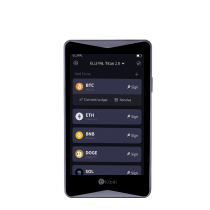
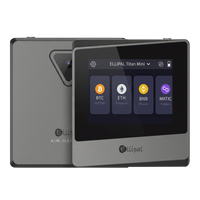
L’ ELLIPAL Titan 2.0 est un portefeuille froid isolé du réseau, ce qui signifie qu’il ne dispose ni du Wi-Fi, ni du Bluetooth, ni d’une connexion USB pour les données, ni du NFC. L’ELLIPAL Titan 2.0 échange des données avec votre téléphone uniquement au moyen de codes QR, lus par sa caméra et affichés sur son propre écran. Les clés privées sont générées et stockées hors ligne, et la signature s’effectue à l’intérieur du boîtier métallique scellé.
L’écran de 4 pouces de ELLIPAL Titan 2.0 est l’endroit où une transaction devient lisible avant votre approbation. L’appareil décode la transaction et affiche l’adresse de destination ainsi que le montant sur un matériel qu’aucun navigateur ne peut modifier. Le boîtier entièrement métallique et scellé est conçu pour effacer les clés stockées si l’on tente de l’ouvrir de force. Un appareil livré déjà ouvert n’a donc plus rien à révéler.
ELLIPAL X Card
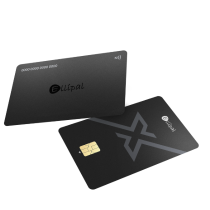
L’ ELLIPAL X Card est un portefeuille froid NFC au format carte bancaire, et la clé privée reste à l’intérieur de sa puce sécurisée CC EAL6+. Common Criteria EAL6+ est un niveau de certification destiné aux puces conçues pour résister à l’extraction physique et logique ; c’est le niveau utilisé pour les cartes de paiement et d’identité. ELLIPAL X Card n’a ni batterie ni port de recharge : la carte reste inactive dans votre portefeuille jusqu’à ce que vous la teniez contre un téléphone.
La configuration de ELLIPAL X Card s’effectue avec X Card Starter, un appareil hors ligne distinct qui génère la phrase de récupération. La création des clés reste donc séparée de votre téléphone. La signature ultérieure se fait en tenant la carte contre le téléphone, et la clé reste sur la puce pendant cet échange. La phrase suit la norme BIP39 : les mots que vous notez lors de la configuration permettent de restaurer le portefeuille sur n’importe quel portefeuille BIP39, quelle que soit la marque.
Votre phrase de récupération est l’élément à protéger
L’appareil est remplaçable, mais pas la phrase de récupération. Perdre le matériel ne vous coûte que le matériel : un appareil de remplacement reconstruit le même portefeuille à partir des mots. Perdre la phrase sans seconde copie est le cas qui entraîne la perte d’accès, car aucun fabricant n’en conserve un exemplaire de secours.
Le stockage doit tenir compte de cette différence. Le papier résiste dans un tiroir, mais pas à une inondation ; c’est pourquoi de nombreux détenteurs reportent les mots sur du métal. ELLIPAL Seed Phrase Steel reconstitue la phrase à partir de plaques gravées plutôt qu’avec de l’encre. Deux copies conservées dans deux endroits distincts suppriment le point de défaillance unique. Les quatre méthodes courantes de sauvegarde diffèrent principalement par leur résistance à l’eau et à la chaleur.
Gardez la phrase à l’écart de tout ce qui se synchronise. Une photographie, une application de notes ou une sauvegarde cloud transforme un secret hors ligne en secret en ligne. À partir de ce moment, le matériel acheté pour conserver la clé hors ligne cesse d’assumer sa part du travail. ELLIPAL ne détient pas vos clés et ne peut pas restaurer un portefeuille à votre place.
Quelle situation correspond à la vôtre
- Vous avez acheté sur une plateforme d’échange et vous l’y avez laissé. Le solde figure dans le registre et la clé se trouve sur la plateforme : votre accès dépend donc du fait que la plateforme continue de vous l’accorder.
- Vous utilisez chaque semaine un portefeuille de navigateur pour la DeFi. La clé se trouve sur un appareil connecté à Internet, ce qui convient aux petits soldes utilisés au quotidien, mais moins aux avoirs détenus à long terme.
- Vous conservez vos fonds à long terme et les déplacez rarement. Le stockage hors ligne de la clé avec un écran de confirmation intégré à l’appareil correspond à ce profil : c’est le cas de ELLIPAL Titan 2.0.
- Vous voulez un stockage à froid qui se glisse dans un emplacement de portefeuille. ELLIPAL X Card conserve la clé dans sa puce sécurisée et signe par simple contact, sans avoir à prévoir de recharge.
- Vous avez écrit la phrase sur papier il y a deux ans. Les mots fonctionnent toujours, et le papier est l’élément le plus fragile de la chaîne. Une seconde copie sur métal est l’amélioration la moins coûteuse à votre disposition.
- Vous avez photographié la phrase par commodité. Transférez les fonds vers un portefeuille fraîchement généré, car une photographie synchronisée doit être considérée comme ayant été lue par quelqu’un d’autre.
- Vous configurez le système pour un membre de votre famille. Notez où se trouve la phrase, et non la phrase elle-même, puis vérifiez qu’il ou elle peut trouver les instructions sans vous.
Foire aux questions
Si mes cryptomonnaies sont sur la blockchain, pourquoi ai-je besoin d’un portefeuille matériel ?
Le registre applique une seule règle : quiconque détient la clé peut déplacer les fonds. La blockchain ne sait pas qui vous êtes et accepte toute transaction accompagnée d’une signature valide. Un portefeuille matériel conserve la clé qui produit cette signature sur une puce dédiée. L’alternative consiste à utiliser un appareil exécutant un navigateur, une boutique d’applications et tout le reste de ce que vous avez installé cette année.
Mes cryptomonnaies se trouvent-elles dans l’appareil ? Que se passe-t-il si l’appareil tombe en panne ?
Non, les cryptomonnaies ne se trouvent pas dans l’appareil et un appareil défectueux ne modifie pas un solde. Les adresses et leurs soldes restent inscrits dans le registre. Vous restaurez le même portefeuille sur un appareil de remplacement en saisissant votre phrase de récupération. Les fonds apparaissent aux mêmes adresses, car la phrase régénère les mêmes clés.
ELLIPAL peut-il voir mon solde ou récupérer mon portefeuille à ma place ?
Non. ELLIPAL ne détient pas vos clés privées et ne possède aucune copie de votre phrase de récupération : il n’y a donc aucun compte à réinitialiser ni aucune procédure d’assistance permettant de restaurer l’accès. C’est le compromis inhérent à l’autodétention, et c’est pourquoi la sauvegarde de votre phrase compte davantage que le matériel. L’assistance peut vous aider avec un appareil, mais personne ne peut vous aider si vous avez perdu votre phrase.
L’utilisation d’un portefeuille matériel entraîne-t-elle des frais après son achat ?
L’appareil s’achète une seule fois, et ELLIPAL ne facture ni abonnement ni frais par transaction pour la conservation ou la signature. Vous payez néanmoins les frais du réseau blockchain pour toute transaction que vous envoyez, car ces frais vont aux validateurs du réseau et non à une entreprise de portefeuilles. La réception de fonds est gratuite.
Si je perds à la fois l’appareil et la phrase de récupération, mes cryptomonnaies sont-elles perdues ?
En pratique, oui. Le solde reste visible à jamais sur le registre, et sans la clé ni les mots qui permettent de le reconstituer, personne ne peut autoriser une transaction depuis ces adresses. C’est le seul mode de défaillance qu’il vaut la peine de prévoir ; c’est pourquoi la recommandation habituelle consiste à conserver deux sauvegardes de la phrase dans deux lieux distincts, plutôt que de considérer cela comme un supplément facultatif. La récupération dans ce cas est expliquée dans ce qui se passe si vous perdez votre portefeuille matériel.
Un portefeuille matériel vaut-il le coup si je ne détiens qu’un petit montant ?
Cela dépend de la durée pendant laquelle vous prévoyez de conserver vos fonds et de la façon dont vous les utilisez. Les soldes que vous négociez chaque semaine doivent rester accessibles, tandis que les soldes que vous comptez conserver pendant des années bénéficient d’une clé qui reste hors ligne entre les transactions. De nombreux détenteurs utilisent les deux : un petit solde courant dans un logiciel et leurs avoirs à long terme sur un portefeuille matériel.
À propos d’ELLIPAL
ELLIPAL est présent sur le marché depuis 2018 et compte plus d’un million d’utilisateurs dans plus de 140 pays. Le matériel ELLIPAL prend en charge plus de 10 000 tokens sur plus de 45 blockchains et respecte les normes BIP39 et BIP44 : les phrases de récupération créées sur les appareils ELLIPAL peuvent être restaurées sur d’autres portefeuilles compatibles. La ELLIPAL X Card utilise une puce sécurisée CC EAL6+. Achetez auprès d’une source officielle et consultez le comportement du code PIN de tout appareil que vous possédez avant de vous y fier.
Possédez-le. Puis utilisez-le.
Remarque de sécurité : aucune configuration en auto-conservation ne supprime tous les risques. Le stockage hors ligne des clés et la confirmation sur l’appareil éliminent des catégories importantes d’attaques à distance, mais ne couvrent pas les risques physiques, liés à la chaîne d’approvisionnement, au micrologiciel, à l’ingénierie sociale ou aux erreurs de l’utilisateur. Achetez auprès d’une source officielle, conservez votre phrase de récupération sur une sauvegarde hors ligne durable, séparée de l’appareil, ne la partagez pas et ne la saisissez jamais au format numérique, puis vérifiez chaque transaction avant de l’approuver. Cet article fournit des informations générales et éducatives sur l’architecture des portefeuilles en 2026. Les variantes de produits peuvent différer. Il ne constitue pas un conseil financier, d’investissement ou de conservation.