
Ricerca sulla sicurezza
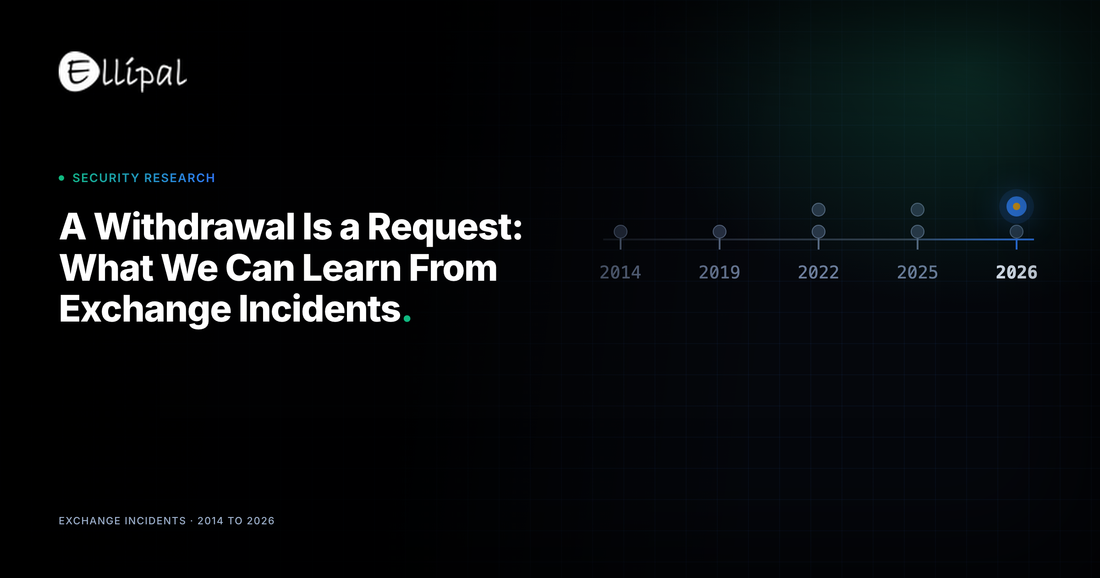
A Withdrawal Is a Request: What We Can Learn From Exchange Incidents
Main Takeaway: A balance on an exchange is a record in the exchange's ledger, and taking coins out is a request the exchange has to approve. From Mt. Gox in 2014 to Binance in October 2026, exchange incidents have followed a few repeating patterns, and in most of them users waited on the platform's decision to get their coins back. Self-custody moves the keys, and the work of protecting them, to you. What does an exchange balance actually represent? When you buy crypto on an exchange, the coins usually sit in wallets the exchange controls, alongside everyone else's. Your account shows your share as an entry in the exchange's own database. Coins only leave when you ask for a withdrawal and the exchange signs a transaction from one of its wallets. That step depends on the exchange's systems, policies and solvency on the day you ask. Our guide on where your crypto is actually stored covers the mechanics in more...
Can Your Phone Replace a Hardware Wallet?
A phone can store keys, but it also runs many apps and stays online. Here is what a hardware wallet separates from the phone, and what it does not cover,...
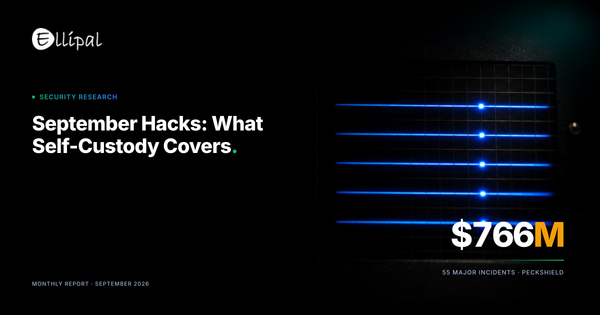
Crypto Hacks in September 2026: What Happened and What Self-Custody Covers
PeckShield counted $766.49M lost to 55 major hacks in September 2026. Most came from one exchange wallet system and one sidechain peg. What self-custody changes and what it leaves as...

How ELLIPAL Hardware Is Built Against Supply Chain Attacks
A hardware wallet supply chain attack modifies a device before delivery. ELLIPAL answers it in layers, from a case built to resist opening and...
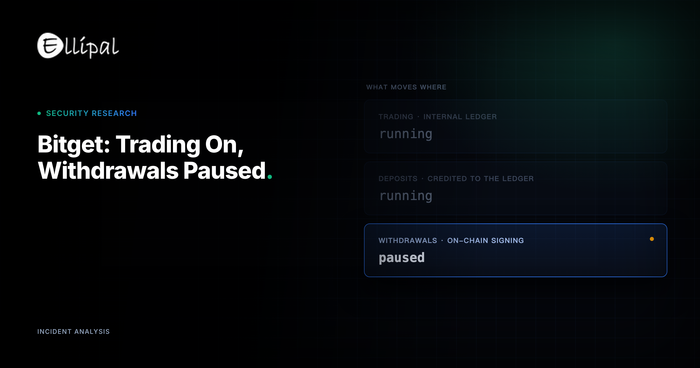
Bitget Hot Wallet Incident: Why Trading Continues While Withdrawals Are Paused
Bitget reported about $351.6 million in unauthorized hot wallet transfers on September 24, 2026. Withdrawals paused while trading continued. Here is why both can...
FomoPeek iOS Attack: What Crypto Wallet Users Should Do
FomoPeek 1.1 and 1.2 carried malicious modules capable of escaping the iOS sandbox. Learn what was exposed, what to do now and where hardware...
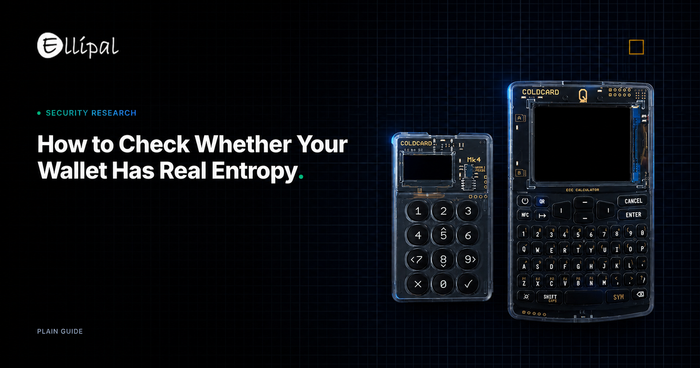
Entropia del seed: come verificare se il tuo wallet ne dispone davvero
La vulnerabilità di Coldcard è stata un errore di compilazione silenzioso: per cinque anni un generatore di numeri casuali software ha sostituito quello hardware....
Sicurezza delle criptovalute nel 2025 e nel 2026: 5 eventi principali e cosa significano per l’autocustodia
Dall’hack da 7 milioni di dollari del browser di Trust Wallet alla presa di controllo del multisig di Drift da 285 milioni di dollari,...

Drift Protocol violato per 285 milioni di dollari: cosa rivela sui rischi degli exchange
L’exploit del protocollo Drift ha dimostrato che “decentralizzato” non significa sicuro. Ecco perché l’autocustodia con un portafoglio hardware isolato da Internet è l’unica vera...
Gli hacker nordcoreani hanno appena compromesso una libreria utilizzata da 83 milioni di app: perché il tuo wallet isolato dalla rete non ha fatto una piega
Hacker nordcoreani hanno compromesso Axios, una libreria npm scaricata 83 milioni di volte a settimana, iniettando malware che prendono di mira gli asset crypto....
Hack da 7 milioni di dollari di Trust Wallet: cosa significa per la sicurezza dei wallet nel 2026
7 milioni di dollari rubati. 2.520 portafogli svuotati. 48 ore. L’hack natalizio di Trust Wallet ha dimostrato che i portafogli browser sono fondamentalmente vulnerabili....
Attacco alla catena di approvvigionamento su NPM: cosa significa per gli utenti di criptovalute
Le tue criptovalute potrebbero essere rubate a tua insaputa. Un pacchetto NPM dannoso è attivo. I cold wallet Clear Signing di ELLIPAL sono l’unica...