

Main Takeaway: An NFC cold wallet is a hardware wallet shaped like a credit card that signs crypto transactions by tapping the card to a phone. The private key stays inside a certified secure-element chip on the card itself, with no Wi-Fi, no Bluetooth, no USB data, and no battery. Communication with your phone happens over Near-Field Communication, a short-range protocol that works only when the card is within about four centimetres of the phone. The card is "cold" because the key never travels through an internet-connected device during normal use, and the chip itself was never online during key generation either. This guide explains how the architecture works, what distinguishes a good NFC cold wallet from a weaker one, and which use cases it fits.
Quick reference
| Term | What it means |
|---|---|
| NFC | Near-Field Communication, a short-range wireless protocol with a working distance of about four centimetres |
| NFC cold wallet | A credit-card-sized hardware wallet that signs transactions over NFC, with private keys stored inside the card's secure chip |
| Secure element | A certified chip on the card that stores private keys and performs signing, isolated from the main phone processor |
| BIP39 | The industry-standard recovery phrase format, so the same seed restores on any compatible wallet from any brand |
| Tap-to-sign | The signing flow where the card is held against a phone, the phone sends the unsigned transaction to the card, and the card returns a signed transaction |
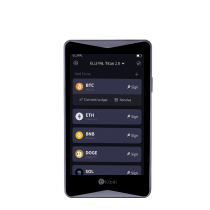
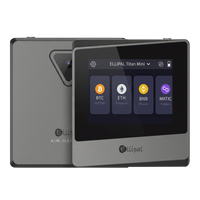
| Offline Starter | A dedicated standalone device some NFC cold wallets use to generate or import recovery phrases offline, separate from any phone |
What is an NFC cold wallet?
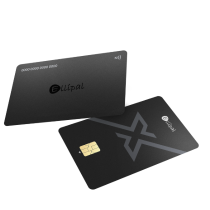
An NFC cold wallet is a credit-card-sized hardware wallet that signs crypto transactions when you tap the card against your phone. The private key that controls your crypto lives inside a small certified chip embedded in the card, called a secure element. The card has no battery, no buttons, no screen of its own, and no Wi-Fi or Bluetooth radios. It draws power inductively from the phone's NFC field for the few seconds a signing operation takes, then goes back to being a passive piece of plastic and chip.
The "cold" part means the private key never leaves the secure-element chip during normal use. When you sign a transaction, the phone sends the unsigned transaction data over NFC, the card processes it inside the chip, and a signed transaction comes back. The key itself stays in the chip the entire time. Your phone, even if compromised, never sees the key.
The "NFC" part is what makes the experience feel like tapping a contactless credit card. Near-Field Communication is a short-range protocol that works only when the card is within about four centimetres of the phone. The card and phone must be physically touching or nearly touching for any data to flow between them. There is no persistent connection, no pairing, and no wireless radio that stays active when the card is not being used.
How NFC signing works, step by step
The signing flow for an NFC cold wallet has four steps, repeated each time you want to authorize a transaction.
- You build a transaction in a companion app on your phone. The app shows you the destination, the amount, and the network fee. Nothing is signed yet, so nothing has moved on the blockchain.
- You hold the card against the back of your phone. The phone's NFC field powers the card briefly, and the unsigned transaction data flows to the card's secure-element chip.
- The chip signs internally. The private key, which has lived inside the chip since the wallet was created, signs the transaction without leaving the chip. The signature is what makes the transaction authentic to the blockchain.
- The signed transaction returns to the phone. The phone broadcasts the signed transaction to the blockchain network. Your card goes back to being a passive object until the next time you tap it.
The whole flow takes about three to five seconds from tap to confirmation. There is no cable, no charging, no pairing, and no app login on the card itself. The card is the signer, the phone is the courier, and the blockchain is the destination.
What distinguishes a good NFC cold wallet
Not all NFC cold wallets are built the same. The four properties below are what separate a card you can rely on long-term from one that locks you into a specific brand or compromises on key handling.
| Property | Why it matters | What good looks like |
|---|---|---|
| Secure element certification | The chip storing your private key is the single most important security component on the card | CC EAL6+ certified secure element, the same standard used in passports and payment cards |
| Recovery standard | If the card is lost or damaged, the recovery phrase is what brings the wallet back | BIP39 standard, so the seed phrase restores on any BIP39-compatible wallet from any brand, not just the original manufacturer |
| Key generation environment | A private key generated on an internet-connected device has had exposure that an offline-generated key has not | Key generation happens on a dedicated offline device, not on the phone itself |
| Backup model | Single-card wallets have a single point of failure; backup cards let you keep duplicates in different locations | Support for multiple cards from the same seed, each with its own independent PIN |
The second property in that list, recovery standard, is the one that has the longest-term consequences. A card that uses BIP39 means the words you write down during setup work on any compatible wallet, so your future is not tied to the manufacturer's continued existence. A card with a proprietary recovery system ties your access to that brand's ecosystem.
How NFC cold wallets compare to other hardware wallet types
NFC is one of four connection methods hardware wallets use today. Each puts the wallet in a different position relative to the outside world.
| Connection | How it works | Best for |
|---|---|---|
| NFC | Tap the card to a phone for a few seconds while signing | Daily access, mobile-native users, holders who want a wallet that fits in a real wallet |
| USB | Plug a small device into a computer with a cable | Desktop-centered crypto workflows, holders who value open-source firmware |
| Bluetooth | Pair a device wirelessly to a phone for sustained connection | Active traders who sign frequently and accept a wireless radio for convenience |
| QR code (air-gapped) | Camera scans visual data, with no electronic connection at all | Long-term vault holdings, holders who want zero wireless or wired data path |
NFC sits between the daily-convenience end (Bluetooth) and the vault-isolation end (QR code air-gapped). It removes the persistent wireless radio that Bluetooth has, since NFC works only when the card and phone are touching, while still keeping the tap-and-go simplicity that distinguishes card wallets from larger devices. For most holders who want a hardware wallet they will actually use every day, NFC is the form factor that gets carried instead of locked in a drawer. For a deeper read on which connection type fits which use case, see our cold wallet guide for 2026.
What to look for when choosing an NFC cold wallet
Beyond the four core properties in the differentiation section above, a few practical considerations matter when picking a specific product.
- Thickness and durability. NFC cards range from about 0.8 mm (thinner than a credit card) to about 2 mm. Thinner cards fit better in a real wallet but may be more flexible. Look for a card that can survive being sat on.
- Coin and chain support. Most modern NFC cold wallets support thousands of tokens. Check that your specific coins are covered before purchasing.
- Phone compatibility. Both iOS and Android support NFC, but the implementation differs slightly. Modern iPhones with iOS 14+ and Android phones with NFC enabled both work with NFC cold wallets, though the user flow varies by manufacturer.
- Companion app maturity. The card itself is the signer, but the app is where you build transactions, view balances, and manage the wallet. A mature app with iOS and Android support matters more than the spec sheet suggests.
- Track record. How long has the brand been on the market, how many users does it have, and what do independent reviewers say. NFC cold wallets are a relatively young product category, so brand history matters.
The ELLIPAL X Card example
The ELLIPAL X Card is one of the NFC cold wallets on the market that pairs the BIP39 standard with offline key generation through a dedicated device called the X Card Starter.
- Form factor: 1.2 mm thin, battery-free, sized to fit next to a credit card in a regular wallet.
- Secure element: CC EAL6+, the same certification standard used in passports and payment cards.
- Recovery standard: BIP39, so the seed phrase you write down during setup works on any BIP39-compatible wallet from any brand.
- Setup workflow: Key generation happens on the offline X Card Starter device, which has no internet connection of its own. The seed phrase is shown once on the Starter screen during setup, then written into the card's chip. The card itself does not display or export the seed phrase again after setup.
- Backup flexibility: Up to 10 cards can be provisioned from the same seed phrase per batch, with each card configured with its own independent PIN. This lets you keep multiple cards in different locations or with different family members without sharing a single code.
- App: Works through the ELLIPAL App on both iOS and Android, with no cables and no charging needed.
For a step-by-step on importing an existing seed phrase from MetaMask, Trust Wallet, or another BIP39 wallet into the X Card, see our seed import guide.
Which use cases fit an NFC cold wallet
- "I want a hardware wallet I will actually carry." Card form factor fits in a regular wallet next to credit cards, with no separate device to remember.
- "I spend or swap crypto a few times a week and want signing to be fast." Tap-to-sign takes a few seconds, compared to longer flows on QR or USB devices.
- "I am moving from MetaMask or Trust Wallet to a hardware wallet." NFC cold wallets that support BIP39 import let you bring your existing seed phrase across, so your accounts and addresses stay the same.
- "I want a wallet I can hand to a family member with its own PIN." NFC cold wallets that support multi-card setups with independent PINs make family or inheritance distribution simpler than shared-PIN models.
- "I want to combine daily-use signing with a separate vault for long-term holdings." NFC cold wallets pair naturally with a separate vault device for the long-term portion, since both can share the same BIP39 seed phrase.
FAQ
Is an NFC cold wallet really cold?
Yes. The private key lives inside a certified secure-element chip on the card and never leaves it during normal use. The card has no Wi-Fi, no Bluetooth, no battery, and no persistent connection of any kind. NFC powers the card only during the few seconds of an actual tap, then the card goes back to being passive.
How is NFC different from Bluetooth on a hardware wallet?
NFC has a working distance of about four centimetres, so the card and phone must be physically touching or nearly touching for any data to flow. Bluetooth has a range of up to ten metres and maintains a persistent wireless connection while paired. The shorter range and on-demand nature of NFC removes the wireless attack surface that exists with Bluetooth, although Bluetooth offers more convenience for active trading.
Can NFC be hacked through the air?
The short range of NFC, about four centimetres, makes remote interception impractical compared to longer-range protocols. The signing itself happens inside the certified secure-element chip on the card, so even if someone captured NFC traffic, they would capture the same data that the blockchain receives, not the private key. The key never leaves the chip during a transaction.
What happens if I lose my NFC cold wallet card?
Your crypto is safe as long as your seed phrase is backed up. The blockchain holds your assets, not the card. You can provision a new card from the same seed phrase, and the new card controls the same accounts. If you used a multi-card setup with several cards from the same seed, the other cards continue to work independently because each has its own PIN.
Do NFC cold wallets work with iPhone?
Yes. NFC cold wallets work with modern iPhones running iOS 14 or later, and with Android phones that have NFC enabled. The specific flow varies by manufacturer, but the core experience of tapping the card to the phone for signing is similar across platforms.
What is the difference between an NFC cold wallet and a software wallet like MetaMask?
A software wallet stores the private key on your phone, where the same operating system also runs your browser, email, and other apps. An NFC cold wallet stores the private key inside a certified secure-element chip on a card that has no internet connection of its own. The phone is only the courier for unsigned and signed transactions, and the key never enters the phone's environment. For most holders, this reduces the categories of attack that can reach the key.
Can I have multiple NFC cards for the same wallet?
Yes, on wallets that support multi-card provisioning from one seed phrase. The ELLIPAL X Card supports up to 10 cards per batch, each with an independent PIN. This is useful for keeping a backup card in a safe, handing a card to a family member, or having a travel card separate from your daily card. Other NFC cold wallet brands support multi-card backup with varying limits and PIN models.
What is BIP39 and why does it matter for NFC cold wallets?
BIP39 is the industry standard for crypto wallet recovery phrases. A BIP39-compatible card means the 12 or 24 word phrase you write down during setup works on any other BIP39 wallet, including future devices from any brand. This protects you from being locked into a single manufacturer's ecosystem. Some NFC cold wallets use proprietary recovery models that only work within the same brand; BIP39 is the open alternative.
The trust layer
- Standard: BIP39 / BIP44, recoverable on any compatible wallet from any brand
- Certification: CC EAL6+ secure elements on leading NFC cold wallets, the same standard used in passports and payment cards
- Range: NFC working distance of about 4 cm, requiring physical proximity for any data exchange
- Phone compatibility: modern iPhones (iOS 14+) and Android phones with NFC enabled
- ELLIPAL X Card specifics: 1.2 mm thin, battery-free, CC EAL6+ secure element, offline X Card Starter for key generation, up to 10 cards per batch with independent PINs
- ELLIPAL track record: on the market since 2018, with more than 1 million users in 140+ countries
- Independent reviews: Coin Bureau, 99Bitcoins, CryptoNews cover the NFC cold wallet category
An NFC cold wallet is the form factor for holders who want a hardware wallet they will actually use every day, with tap-to-sign speed and a card that fits in a regular wallet. The choice within the category comes down to recovery standard, key generation environment, and backup flexibility. Match those to what you want for the long term, and the right card tends to be obvious.
Own it. Then use it.
Security note: No self-custody setup removes every risk. An NFC cold wallet keeps the private key inside a certified secure element and removes persistent wireless attack paths, but it does not eliminate physical, supply-chain, firmware, social-engineering, or user-error risks. Buy from an official source, write your recovery phrase on a durable offline backup kept separately from the card, do not share or digitally enter it, and verify every transaction in the companion app before tapping to sign. This article is general educational information about wallet architecture and is based on publicly available product information as of 2026; specific product variants may differ. It is not financial, investment, or custodial advice.