

Main Takeaway: On April 1, 2026, Solana's largest perpetual-futures DEX, Drift Protocol, was exploited for about $285 million. The attack was not a smart-contract bug. Attackers social-engineered 2 of 5 multisig signers, took admin control, and drained funds. The lesson is the same one FTX taught in 2022. Whenever a small number of people hold the keys, that is counterparty risk, whether the platform calls itself "centralized" or "decentralized." Self-custody with a hardware wallet is the way to remove it.
Quick reference
| Term | What it means |
|---|---|
| CEX | Centralized exchange, where a company holds your keys (Coinbase, Binance, the old FTX) |
| DEX | Decentralized exchange, run by smart contracts on a blockchain |
| Multisig | A wallet that requires multiple keys to authorize a transaction (such as 2 of 5) |
| Counterparty risk | The risk that someone else holding your assets fails, exits, or is compromised |
| Self-custody | Holding your own private keys, with no third party in between |
| Air-gapped | No internet, Bluetooth, USB data, or NFC; communication only by QR code |
Layer 1: CEX counterparty risk, the FTX lesson
FTX collapsed in November 2022, with over $8 billion in user funds lost. The lesson was the maxim "Not your keys, not your coins." Yet in 2026, many crypto users still keep assets on centralized exchanges. A centralized exchange holds the keys for everyone using it, which means everyone using it shares a single point of failure. The current Fear Index of 9 out of 100 represents the longest extreme-fear streak since FTX.
Layer 2: "Decentralized" did not mean what users thought
Drift Protocol was Solana's largest perpetual-futures DEX. On April 1, an attacker took approximately $285 million through a multisig takeover, not through a smart-contract bug.
How the Drift hack worked:
Drift's "Security Council" was a 2 of 5 multisig with no timelock. The attacker social-engineered 2 of the 5 signers, then used Solana's durable-nonce feature to pre-sign malicious transactions that were executed on April 1. With admin access, they created a fake collateral token with an inflated oracle price, disabled circuit breakers and withdrawal limits, and drained USDC, WBTC, USDT, and JLP. Funds were routed through Jupiter, bridged via deBridge and Wormhole, and passed through mixers. Elliptic and TRM Labs identified indicators "potentially linking the attack to DPRK (North Korea) state actors." TVL fell from around $550 million to under $300 million within an hour.
Layer 3: The core problem is who actually holds the keys
Whether you are looking at FTX (centralized), Drift (nominally decentralized), or anything in between, the vulnerability is the same: assets controlled by a small group of people you have never met.
- FTX's funds were controlled by a handful of executives.
- Drift's funds were governed by a 5-person Security Council, and the attacker needed only 2.
- Most exchange incidents follow the same pattern. A small number of keys becomes a single point of failure, which becomes a total loss of funds.
Layer 4: How to remove counterparty risk
Self-custody with a hardware wallet means you hold your own private keys, with no exchange able to freeze them and no multisig council able to override them. Hardware wallets differ in how they protect those keys.
Software wallets (MetaMask, Phantom):
Keys live on an internet-connected device. You hold them yourself, which is already better than an exchange, but the device itself is a target for malware, phishing, clipboard hijacking, and supply-chain attacks.
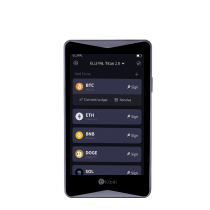
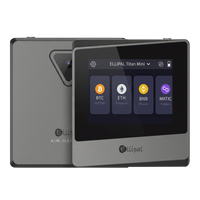
ELLIPAL Titan 2.0, the vault:
An air-gapped cold wallet with no USB data port, no Bluetooth, no Wi-Fi, and no NFC. Communication happens only through QR codes, which are visual data that cannot carry malware.
- Connection: QR code only, with no internet pathway
- Secure element: CC EAL5+ certified
- Physical protection: full-metal sealed casing that is designed to wipe keys if breached
- Recovery: standard BIP39 seed phrase
- Mobile-first: large touchscreen, designed for phone-based use
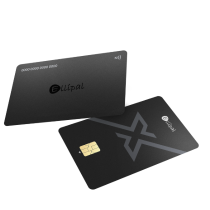
ELLIPAL X Card, the everyday carry:
For daily crypto, such as spending, swapping, and quick transactions, the X Card provides hardware-level protection in a card-shaped form.
- Connection: NFC tap-to-transact
- Secure element: CC EAL6+
- Recovery: full BIP39 compatibility
- Portability: credit-card-sized
The architecture comparison
| Dimension | CEX (e.g. FTX) | DEX (e.g. Drift) | Software wallet | ELLIPAL Titan 2.0 | ELLIPAL X Card |
|---|---|---|---|---|---|
| Who holds the keys? | Exchange | Multisig council | You (on device) | You (air-gapped) | You (NFC card) |
| Internet exposure | Always online | Contract online | Hot wallet | None (QR only) | NFC only |
| Admin override risk | ⚠️ High | ⚠️ High (2 of 5 multisig) | None | ✅ None | ✅ None |
| Recovery standard | N/A | N/A | BIP39 | BIP39 | BIP39 |
| Counterparty risk | ⚠️ High | ⚠️ High | ⚠️ Medium | ✅ None | ✅ None |
ELLIPAL has operated since 2018 across 140+ countries, supporting 41+ blockchains and 10,000+ tokens for more than 1 million users.
Match the tool to your scenario
- Long-term holdings (savings, HODL stack): ELLIPAL Titan 2.0, air-gapped, QR only, with a metal anti-tamper body.
- Daily spending and quick swaps: ELLIPAL X Card, NFC tap, CC EAL6+, BIP39 standard.
- Active trading: use a DEX or CEX only for the amount you are willing to risk, and move profits to cold storage regularly.
ELLIPAL is the hardware-wallet brand offering both an air-gapped vault and an NFC daily card in one app ecosystem.
What should change, for protocols and for you
For protocols: A 2 of 5 multisig with no timelock is an architecture weakness. Industry-standard practice points to higher thresholds (3 of 5 or 4 of 7), mandatory timelocks on admin actions, and transparent Security Council identities.
For individuals: The pattern across FTX (2022), several bridge exploits (2023 to 2025), and now Drift (2026) is consistent. The shared element is counterparty risk.
- Assess your exchange exposure, including how much crypto sits in platforms you do not control.
- Move core holdings to self-custody with standard BIP39 recovery.
- Match the security level to the use case, with a vault for savings and a card for spending.
- Keep no more on an exchange than you are willing to lose.
FAQ
What happened to Drift Protocol?
On April 1, 2026, Drift, Solana's largest perpetual-futures DEX, was exploited for about $285 million. The attacker social-engineered 2 of 5 multisig signers, used Solana's durable-nonce feature to pre-sign malicious transactions, then executed them to take admin control, create a fake collateral token, disable circuit breakers, and drain funds. Elliptic and TRM Labs identified indicators potentially linking it to North Korean state actors.
Is my crypto safe on a DEX?
Not necessarily. Many DEXs have admin controls that create centralized points of failure. As long as your funds sit inside a smart contract governed by someone else's keys, you carry counterparty risk, regardless of the "decentralized" label.
What is a multisig exploit?
A multisig wallet requires multiple keys to authorize a transaction. An exploit happens when an attacker obtains enough keys to meet the threshold, which in Drift's case was 2 of 5, often through social engineering or phishing. Risk grows when the threshold is low and there is no timelock on execution.
How should I store crypto for the long term in 2026?
Self-custody with a hardware wallet using standard BIP39 recovery. For long-term holdings, an air-gapped device like ELLIPAL Titan 2.0 (QR only, CC EAL5+, metal anti-tamper) removes both internet-based and physical attack paths. For daily use, an NFC card like ELLIPAL X Card (CC EAL6+, BIP39) provides hardware-level protection.
Why is air-gapped preferred over Bluetooth or USB for long-term storage?
Bluetooth and USB create data pathways between the wallet and internet-connected devices. These are designed to be secured, but they remain attack surfaces with documented protocol vulnerabilities (Bluetooth: BlueBorne, KNOB). An air-gapped device has no such pathway, since QR codes are visual data and cannot transmit malware. For long-term holdings, removing the connection removes the largest category of remote-attack risk.
Own it. Then use it.
Security note: No self-custody setup removes every risk. Air-gapped architecture removes remote network attack paths but does not eliminate physical, supply-chain, firmware, social-engineering, or user-error risks. Buy from an official source, store your recovery phrase on a durable offline backup kept separately, and do not share or digitally enter it. This is general educational information, not financial, investment, or custodial advice.