



Main Takeaway: Crypto inheritance planning is how you arrange for your family to access your crypto if you die, without exposing your private keys while you are alive. The core of it is simple. Make sure the right person can find your recovery phrase and knows what to do with it, and make sure no one else can. This guide walks through how to do that, step by step.
Quick reference
| Term | What it means |
|---|---|
| Crypto inheritance | Arranging for your heirs to access your crypto after you die |
| Recovery phrase | The 12 or 24 words that can restore a wallet; whoever has them controls the funds |
| Seed backup | A durable copy of the recovery phrase, often on stainless steel |
| Backup card | A spare NFC card that can restore access when paired with its PIN |
| BIP39/44 | The open standard most wallets use, so a recovery phrase works across compatible wallets |
A point about self-custody often goes unsaid. If you are the only person who can reach your crypto, then your crypto disappears the moment you do.
There is no bank to call, no "forgot password" link, no customer service line that can verify your family and release the funds. The recovery phrase that protects your crypto from everyone else protects it from your loved ones too, unless you plan for that on purpose.
The reassuring part: planning for this is not complicated, and you do not need a lawyer to start. What you need is a backup someone can find, instructions they can follow, and a little structure so the plan outlives you. Let us walk through it.
What is crypto inheritance planning?
Crypto inheritance planning is the process of arranging for your heirs to access your crypto after you die, while keeping your keys private and secure while you are alive.
The problem it solves is specific. Crypto held in self-custody has no built-in "next of kin" process. Without a plan, the assets are usually lost for good. You solve it by documenting what you own, creating a recoverable backup of your wallet, and leaving clear instructions that only the right person can act on. It matters for anyone holding meaningful crypto who wants it to actually reach their family.
Crypto inheritance methods, side by side
There are a few common ways people try to pass on crypto, and they are not equal. Here is how the main options compare.
| Method | Can your heirs access it? | Your risk while alive | Survives if a company shuts down? |
|---|---|---|---|
| Leave it on an exchange | Sometimes, depending on the estate process | A third party holds your keys | No |
| Seed phrase on paper in a drawer | Yes, if they find it and know what it is | Fire, water, theft, misplacement | Yes |
| Seed phrase on a steel backup, plus instructions | Yes | Low, since it is stored offline | Yes |
| Backup card handed to an heir with a separate PIN | Yes | Low, since the card alone is not enough | Yes |
The pattern is clear. The durable, recoverable, self-custody methods are the ones that actually reach your family and keep working regardless of what happens to any single company.
Why crypto inheritance is different from a bank account
With a bank account, inheritance is mostly a paperwork problem. Your family brings a death certificate and a will, and the bank transfers the money. There is an institution whose job is to make that happen.
Crypto in self-custody works differently, because there is no institution in the middle. Your recovery phrase, which is the sequence of words that can restore your wallet, is the asset. Whoever holds it controls the funds; whoever does not, cannot.
That property cuts both ways. Self-custody is powerful because no company stands between you and your funds, and no company can freeze or block your access. Inheritance needs a plan for the same reason. The property that locks everyone else out will lock your family out too, unless you arrange for it.
The recovery phrase that makes self-custody yours is the same thing that makes inheritance a deliberate act, not an automatic one.
The point of a crypto inheritance plan is to bridge that gap on purpose: to make sure the recovery phrase reaches exactly one trusted person at exactly the right time, and no one else.
How to set up a crypto inheritance plan
You can do the core of this in an afternoon. Seven steps.
- Take inventory. List what you hold and where, including which wallets, which exchanges, and roughly how much. Do not write any keys or recovery phrases here. This is a map, not a key.
- Choose your backup method. Options include a steel backup plate for the recovery phrase, a set of backup cards, or both. Durable is better than convenient.
- Create the backup. Record your recovery phrase on the steel backup, or generate your backup cards. This step happens offline, on the device itself, not on a phone or computer.
- Write instructions a non-technical person could follow. Assume your heir has never touched crypto. Explain what the backup is, what it restores, and the first three things to do.
- Separate the pieces. Store the backup and the instructions apart from each other and from the device. No single hiding place should be enough on its own.
- Tell the right person it exists. They do not need to know what it says, only that it exists and how to find it when the time comes. A plan that no one knows about is not a plan.
- Review it once a year. Update it when your holdings change significantly, or when your chosen heir changes.
Which situation sounds like yours?
- "I want my spouse to access our crypto if something happens to me." Create one durable backup you both understand, store it securely, and walk them through a practice recovery once so it is not their first time under stress.
- "I want to leave crypto to my kids, who are not into crypto yet." Write the instructions for a complete beginner, and lean on the BIP39/44 standard so they can recover on whatever wallet exists when they need it.
- "I do not want anyone to touch it until I am gone." Keep the backup and its PIN separated, and give the "where to find it" instructions to a trusted person or your estate, sealed until needed.
- "My crypto is spread across several wallets and exchanges." Start with the inventory step. A single clear map of where everything lives is often the most valuable part of the whole plan.
- "I want to set this up myself, without a lawyer yet." The steps above need no lawyer. For large or complex estates, add a professional later; the backup and written instructions cover most of the work.
- "I want the plan to grow with my holdings." Keep the inventory in a place you revisit yearly, and treat the annual review as the moment to add new wallets or assets.
Where ELLIPAL fits
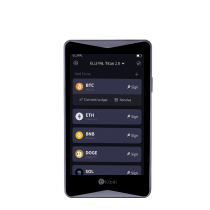
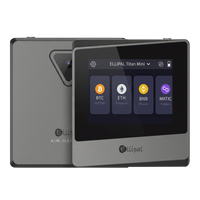
ELLIPAL hardware wallets follow the BIP39/44 standard, which is the open standard most wallets use for recovery phrases. For inheritance, that matters because your wallet can be recovered on any compatible wallet using the recovery phrase, so your heirs are not locked into one brand or one device.
Two ELLIPAL pieces are worth knowing for the backup itself.
- The Seed Phrase Steel Backup stores your recovery phrase on stainless steel, so the backup survives fire and water that would destroy paper.
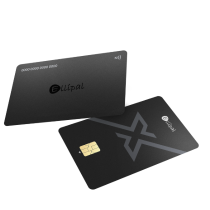
- The X Card, an NFC cold wallet, can generate backup cards. A spare card with its separate PIN can restore access, which gives you a clean way to hand one card to an heir while keeping the PIN separate.
These are two methods of backup, not a hierarchy. Choose by your situation, not by price or product tier.
FAQ
What happens to my crypto when I die?
If you hold it in self-custody and no one else can reach your recovery phrase, the crypto becomes permanently inaccessible, because there is no central recovery process. With a plan in place, your designated heir uses your backup to restore the wallet and access the funds.
Can I put my crypto in my will?
You can name crypto in a will as an asset and say who inherits it. What you should not do is write the recovery phrase itself in the will, because a will can become a public court record. Reference where the backup is, not what it says.
Should I write my seed phrase in my will?
No. A will often becomes part of the public probate record, which would expose your recovery phrase to anyone who reads it. Keep the phrase on a separate, secure backup, and use the will only to point a trusted person toward it.
How do my heirs access a hardware wallet they have never used?
They use your recovery phrase to restore the wallet, either on your device or on any compatible one. This is why clear, beginner-level written instructions matter as much as the backup itself.
What if my heirs are not technical?
Write the instructions for a complete beginner, and consider doing one practice run with them. Because ELLIPAL follows the BIP39/44 standard, they can also restore on a simpler wallet if that is easier for them later.
Is it safe to store my recovery phrase for inheritance?
It is, provided you store it on a durable offline backup, keep it separate from the device and the instructions, and limit who knows it exists. The risk comes from a single unprotected copy, not from having a backup at all.
Can I just leave my crypto on an exchange for my family?
You can, but the trade-offs add up. The exchange holds your keys, the estate-transfer process varies by jurisdiction and can be slow, and the account is exposed if the company fails. Self-custody with a documented backup keeps control in your family's hands.
How much does it cost to set up a crypto inheritance plan?
The plan itself is free, since inventory, instructions, and separation cost nothing. The only spend is on a durable backup, such as a steel plate or a hardware wallet with backup cards. For a basic estate, no lawyer is required to begin.
How often should I update my crypto inheritance plan?
Review it once a year, and any time your holdings change significantly or your chosen heir changes. An out-of-date plan is the most common reason a good setup fails when it is finally needed.
The trust layer
- Standard: BIP39/44, recoverable on any compatible wallet
- Backup options: Seed Phrase Steel Backup; X Card backup cards
- Security: CC EAL6+ certified secure element, the grade used in passports and payment cards
- Track record: on the market since 2018, with more than 1 million users in more than 140 countries
- Independent reviews: Coin Bureau, 99Bitcoins, CryptoNews
A crypto inheritance plan is one of the few things in self-custody you set up once and hope never to need. It is also one of the few that, done right, quietly takes care of the people you care about.
Own it. Then use it.
Start your plan
- Back up your wallet: Seed Phrase Steel Backup
- Explore the X Card: an NFC cold wallet with backup cards
- Plan for the unexpected: What happens if you lose your hardware wallet
Security and legal note: This article is general educational information about wallet architecture and inheritance planning. It is not financial, investment, custodial, or legal advice. Estate and inheritance laws vary by country and situation, so consult a qualified estate professional for your circumstances. No self-custody setup removes every risk. Store backups securely, do not share or digitally enter your recovery phrase, and keep firmware up to date.