


Main Takeaway: ELLIPAL, a hardware crypto wallet brand, organizes security by distance, meaning how close an attacker has managed to get to your private key. The distance model produces six layers, from where the key was created through to whether your setup survives a decade of ordinary life. Every ELLIPAL hardware wallet answers all six, and what changes between devices is the implementation rather than the question.
Security is a distance problem
Most security marketing in the hardware wallet category is a list of features. A list makes two wallets look comparable when they are answering very different questions, and it hides the variable that decides whether a wallet holds up, which is distance.
An attacker sitting on a network in another country is a different problem from an attacker holding your device, and both are different from someone standing in front of you. A wallet can be strong at one of those distances and thin at another. Feature lists do not show you that.
ELLIPAL builds its security model against distance. The result is six layers, ordered by how close the attacker has already gotten, each answering a specific position rather than a general idea of risk.
| Layer | Where the attacker is | What the layer addresses |
|---|---|---|
| 00 Key genesis | Before the key exists | Whether the key is genuinely random and belongs only to you |
| 01 Isolation | At the other end of a network | Whether any path exists between the internet and the key |
| 02 Verification | Inside your phone or a DApp | Whether what you approve matches what you intended |
| 03 Physical | Holding the device | Whether key material can be pulled out of the hardware |
| 04 Coercion | Holding you | Whether handing over a wallet hands over everything |
| 05 Resilience | Time itself | Whether the setup survives loss, damage and future defects |
Quick reference
| Term | What it means |
|---|---|
| Air-gapped | A device with no radio and no data port, so no network path exists into it or out of it. |
| Secure element | A dedicated chip built to generate and hold key material and to run cryptographic operations inside its own boundary. |
| Clear signing | Decoding a transaction and showing the recipient, amount, asset and chain for review before a signature is produced. |
| BIP39 and BIP44 | The public standards that define recovery phrase wording and the derivation paths used to turn that phrase into addresses. |
| Passphrase | An extra secret added on top of a recovery phrase, producing a separate set of addresses from the same 24 words. |
| Watch-only wallet | An app that holds public keys only, so it can build and broadcast transactions without ever touching a private key. |
| DApp | A decentralized application, meaning a site or app that connects to your wallet and asks it to sign blockchain transactions. |
The key decides everything above it
Layer 00 covers where your private key came from, and it sits below the other five because nothing above it can repair a bad answer here. A key drawn from a predictable source stays predictable no matter how good the casing is. Some of the costliest hardware wallet failures of recent years have turned on this layer rather than on the more visible ones, including cases where a generator produced recovery phrases from far less randomness than the people using it assumed.
ELLIPAL generates the 24 word recovery phrase offline, with no cable and no network connection present, drawing randomness from a hardware source rather than from a software pseudorandom algorithm. In practice you finish setup without plugging anything into anything, and the only copy of your phrase that leaves the device is the one you wrote down while looking at it. No computer or network connection took part in generating it.
ELLIPAL also accepts a recovery phrase you generated yourself, by any BIP39 compatible method you trust, entered offline during setup instead of the words the device would have generated. An imported phrase means the randomness behind your key does not have to come from us, and it is the one step in this entire architecture that does not have to involve ELLIPAL at all.
Everything here follows BIP39 and BIP44, the public standards, rather than a private scheme. The practical consequence is that the same 24 words restore your assets on wallets from other brands, so leaving is a decision you can make at any point rather than a door we control.
A channel that does not exist cannot be attacked
Layer 01 answers the attacker who is nowhere near you, which describes the overwhelming majority of attempts against crypto holders. The design response is subtraction rather than hardening. No Wi-Fi. No Bluetooth. No USB data connection.
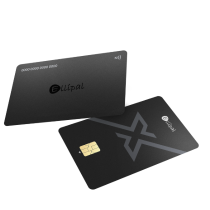
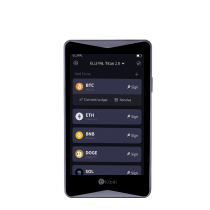
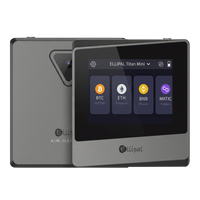
Because there is no persistent link, data moves between an ELLIPAL device and your phone only when you physically make it move. On air-gapped ELLIPAL devices the hardware carries no radio at all, and every transaction crosses the gap as a QR code twice, once when the device camera reads the unsigned transaction off your phone and once when your phone camera reads the signed result back off the device screen. On card format ELLIPAL hardware the key stays inside the secure element, the signature is produced on the card itself, and the card holds no power source, so it is inert until the moment you hold it against your phone.
The benefit of removing connectivity is narrow and worth being precise about. Someone who compromises your home network, your laptop or your phone has still not found a route to the key, because no such route was built into the hardware. There is also nothing to configure, no pairing step and no driver, which removes a category of user error along with the attack surface.
What you approve has to match what you intended
Layer 02 answers an attacker who has already reached your phone or the DApp in front of you. Isolation is no help at this distance, because you are the one authorizing the transaction. The only thing that helps is being shown the truth by something the attacker does not control, and then having to act on it deliberately.
ELLIPAL uses clear signing, decoding each transaction into readable content that shows the recipient, the amount, the asset, the chain and the intent of any contract call, and requires a deliberate physical action from you before a signature exists. Reading those details takes about two seconds. On ELLIPAL hardware with its own screen, that review happens outside the phone, and that is what catches a compromised phone showing one destination while requesting a signature for another. Address substitution remains one of the most common ways funds are lost, and comparing the full recipient address against the one you intended is what catches it. Matching only the first and last characters is weaker, because an attacker can generate an address that shares them.
The ELLIPAL App is a watch-only wallet, which means it holds public keys only. You check balances and prepare transactions there as you would in any wallet, and the App broadcasts the result after signing, but the App has nothing to sign with. Malware on your phone, or a counterfeit app installed from an unofficial store, cannot produce a signature on its own, because signing still has to happen on your hardware with your deliberate approval.
ELLIPAL decodes DApp calls into readable content as well, rather than presenting a bare hash, so you see which contract is asking and what permission it wants. Token approval scams depend entirely on you signing something you could not read, so readable confirmation is what gives you the option to decline.
Assume the device is in the wrong hands
Layer 03 starts from the assumption that the hardware has been taken. ELLIPAL generates keys offline and keeps them inside a secure element that produces every signature you approve, so the key is not written in plain form to a main controller, to system memory or to any external interface. Someone probing the board is working against the chip boundary rather than against the surrounding electronics, and that boundary is what the chip's certification is evaluated against, including resistance testing for power analysis, electromagnetic analysis and induced faults.
One point deserves stating directly, because it is routinely blurred across this category. Common Criteria certification applies to the secure element chip. It does not cover the wallet firmware running around that chip. Any vendor implying that a chip certification covers a whole device is stretching the term, and that caution applies when you read our own specifications too.
ELLIPAL hardware is built as a sealed unit with no exposed data port, so opening one tends to leave marks that are visible without tools. Two behaviors are yours rather than ours at this layer. Inspect the hardware when it arrives and again if it has been out of your control. Set a PIN, and keep your recovery phrase somewhere separate from the device, so that a wipe triggered by repeated incorrect entries costs you a tool rather than your funds.
Assume you are in the wrong room
Layer 04 answers the attacker who is standing in front of you. Hardware security stops helping at the moment that person asks for the PIN. A security model that ignores this position is incomplete, and most published ones do ignore it.
ELLIPAL addresses layer 04 through the BIP39 passphrase mechanism, where an additional secret combined with the same 24 words derives an entirely separate set of addresses. The passphrase is not stored on the hardware, so it cannot be read out of a device that has been taken from you. You choose it at setup and memorize it, keeping it apart from your written phrase.
The passphrase mechanism makes a two account arrangement possible. A visible account holds a working balance, a separate account behind the passphrase holds the rest, and the two sets of addresses are independent. Under pressure you can open a real account with a funded balance and a genuine transaction history, rather than an obvious decoy. The interface shows no indicator either way, which matters because a hidden account that announces its own presence protects nobody.
Time is also an attacker
Layer 05 answers a risk with no attacker attached to it. Devices are lost, houses flood, paper degrades, and defects are found years after shipping. This layer tends to get attention only after something has already been lost.
On ELLIPAL hardware that takes firmware updates, the update arrives as a signed package imported offline rather than pulled down over a connection, and the device checks that signature before it installs. You start an update the normal way, and one that did not come from ELLIPAL is refused by the device rather than caught by you. Recovery phrases belong on something more durable than paper, which is what a steel backup plate is for, stored apart from the device itself. Paper backups are lost to fire, damp and ordinary time far more often than keys are lost to attackers.
Most importantly, recovery runs on the public BIP39 standard and does not pass through any ELLIPAL server. Recovery may sit unused for years, and when you need it you enter your 24 words into any BIP39 compatible wallet. If this company disappeared tomorrow, your recovery phrase would still restore your wallet on other BIP39 compatible software.
Three principles hold the six layers together
Attack surface minimization. A channel that does not exist cannot be attacked, which is why ELLIPAL hardware omits persistent connectivity rather than hardening it.
User verifiability. You do not have to take our word for it. ELLIPAL decodes the transaction and puts the recipient, the amount and the chain in front of you to check before you approve, rather than presenting a hash you would have to accept on faith.
Independence from the vendor. ELLIPAL self-custody wallets keep the keys with you, and this company holds no copy of them and no backup of your recovery phrase, so ELLIPAL cannot move the assets in your wallet or unlock them for anyone else. Your recovery phrase stays portable and recovery avoids our servers, so your access does not depend on ELLIPAL continuing to exist.
What we cannot show you
An honest description of a security model includes the part it leaves open. Reading a wallet's source code, where it is available, tells you what the code says. It does not confirm what is running on the chip in your hand. That gap applies to every hardware wallet vendor, and it applies to ELLIPAL. It is also why the imported phrase option in layer 00 is a core capability rather than a niche setting, the one place where you can substitute your own answer for ours.
Two further limits apply. The chip certification described in layer 03 stops at the secure element and says nothing about the firmware around it. Architecture of this kind closes categories of remote attack, and it does not remove physical, supply chain, social engineering or user error risk. Buying from an official source, checking details before you approve and keeping your backup offline and separate from the device are part of the model rather than optional extras.
Which layer matters most for you
- You hold long term and rarely transact. Layers 00, 01 and 05 carry the weight, and your backup matters more than any signing feature.
- You interact with DApps regularly. Layer 02 is where your risk actually sits, because approval scams do not need your key at all.
- You travel with your holdings. Layer 04 is the relevant one, and a passphrase is worth setting up before you need it rather than after.
- You are unsure about a device's history. Layers 00 and 03 apply, and importing a phrase you generated yourself resolves most of the doubt.
- You already own a hardware wallet and are reassessing. Work down the six layers and ask which ones your current setup answers.
- You are planning for inheritance. Layer 05 governs, because standard recovery is what lets someone restore the wallet without you present.
Frequently asked questions
Is an ELLIPAL wallet safe to use?
ELLIPAL removes the remote attack path by omitting persistent connectivity, keeps key material inside a certified secure element and puts transaction details in front of you before anything is signed. No self-custody setup removes every risk, and the honest description is that this architecture closes specific categories of attack, listed layer by layer above. ELLIPAL has been on the market since 2018 with more than 1 million users across 140+ countries.
Does every ELLIPAL device use the same security model?
Yes. All six layers apply across ELLIPAL hardware, and what differs between devices is how a given layer is implemented rather than whether it is answered. Key generation stays offline, keys stay inside a certified secure element, transactions are decoded for review before signing, and recovery follows the public BIP39 standard on every device.
Does Common Criteria certification mean the firmware has been audited?
No. Common Criteria certification applies to the secure element chip and covers its resistance to physical and side channel attack. It does not extend to the wallet firmware running around that chip, and any vendor implying otherwise is stretching the term. This distinction is worth knowing when comparing any two hardware wallets, including ours against anyone else's.
What happens if I lose my ELLIPAL device?
Your assets live on the blockchain rather than on the device, so a lost device is a lost tool rather than lost funds. Restore your 24 word recovery phrase, plus your passphrase if you set one, onto a replacement device or any BIP39 compatible wallet. Repeated incorrect PIN entries wipe the data stored on the device itself.
Can I use a recovery phrase I generated myself?
Yes. ELLIPAL accepts an imported BIP39 recovery phrase, so the randomness behind your key can come from a method you chose rather than from the device. This is the most direct way to reduce how much you need to trust any manufacturer, and it works the same way on hardware from other brands.
Can ELLIPAL access my funds, or recover them for me?
No. ELLIPAL self-custody wallets keep the keys with you, and this company holds no copy of them and no backup of your recovery phrase. Recovery runs through the public BIP39 standard without passing through an ELLIPAL server. The consequence runs in both directions. Nobody at this company can move your assets, and nobody at this company can restore them if you lose your recovery phrase.
Where should I buy an ELLIPAL wallet, and does the purchase channel matter?
Buy from the official ELLIPAL store or an authorized reseller, because the purchase channel is part of layer 00 and layer 03. A device that arrives with a recovery phrase already printed or preloaded should be treated as interfered with and returned, since you generate your own phrase during setup. If you have any doubt about a unit's history, import a BIP39 recovery phrase you generated yourself, which makes the origin of the hardware much less relevant.
Verified details
- On the market since 2018, with more than 1 million users across 140+ countries
- Certified secure elements across ELLIPAL hardware
- BIP39 and BIP44 compatible, so recovery works on wallets from other brands
- 10,000+ tokens across 45+ blockchains
- No Wi-Fi, no Bluetooth and no USB data connection
- Signature checked firmware, verified by the device before installation
Own it. Then use it.
Security note: No self-custody setup removes every risk. Offline key handling and anti-tamper hardware close significant categories of remote attack, but they do not eliminate physical, supply-chain, firmware, social-engineering, or user-error risks. Buy from an official source, store your recovery phrase on a durable offline backup kept separately from the device, do not share or digitally enter it, and verify every transaction before you approve. This article is general educational information about wallet architecture. It is not financial, investment, or custodial advice.