


Self-Custody Explained

How Does a Multi-Chain Hardware Wallet Work?
Main Takeaway: A multi-chain hardware wallet is a cold wallet that derives keys for many blockchains from one seed phrase. Standards called BIP32 and BIP44 give each chain its own branch of keys, so one backup covers every supported chain. Each chain still keeps its own addresses, balances and fees. Quick Reference Term What it means here Derivation path The route a wallet follows from your seed to one specific key, written like m/44'/60'/0'/0/0. Coin type The number in the path that gives each blockchain its own branch, such as 0 for Bitcoin and 60 for Ether. Native coin The coin a network uses to pay transaction fees, such as ETH on Ethereum. Network The specific blockchain a transfer travels on. The same token can exist on more than one network. How Does One Seed Phrase Hold Coins on Many Chains? One seed phrase holds coins on many chains because a hardware wallet derives a separate key for each chain...

If You Generate Your Own Seed Phrase, What Changes?
BIP39 specifies entropy size, not entropy source. Generating your own seed phrase is valid under the standard, and the risk shifts to the devices those words touch before import.
What Is BIP39? How Seed Phrase Words Work Across Wallets
BIP39 is the open standard behind most seed phrases. Learn how 12 to 24 words encode your wallet, why a restore can show a zero balance and how to keep...
Why Does My Hardware Wallet Keyboard Change Every Time?
A shuffled keyboard keeps fingerprints, wear and heat on fixed keys from revealing a password. Here is how the ELLIPAL Titan 2.0 and the...
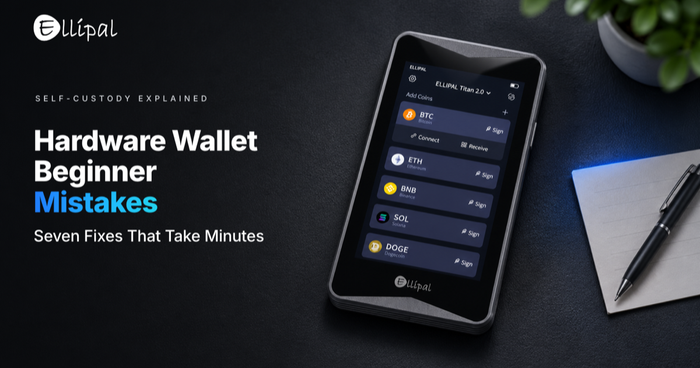
Hardware Wallet Beginner Mistakes and How to Avoid Them
From a photo of the seed phrase to a skipped test transfer, these are the hardware wallet mistakes beginners make most, grouped by when...

What Is an Access Control Vulnerability in DeFi?
An access control flaw lets the wrong account move funds or upgrade a contract. See how it fails, what a cold wallet covers and...

How Long Does a Hardware Wallet Last?
A hardware wallet lasts until a part it depends on wears out. See what ages first, whether a dead battery erases keys and when...

Withdrawals Back in Phases? What to Check Before You Move Coins
When an exchange reopens withdrawals in phases, one coin can be open on one chain and paused on another. What to check before moving...
What Is a Private Key Compromise? How Keys Leak and What to Do
A private key compromise lets someone else sign transactions as you. Learn the common ways keys and seed phrases leak, and the steps to...

How to Rehearse a Seed Phrase Restore Without Typing It Into a Computer
Testing a seed phrase backup is usually described as wiping the device and restoring it. This guide breaks the check into five levels, each...

Where Is Your Crypto Actually Stored? What a Hardware Wallet Really Holds
Your crypto is stored on the blockchain, not inside any wallet. What a hardware wallet holds is the private key that authorizes moving it,...
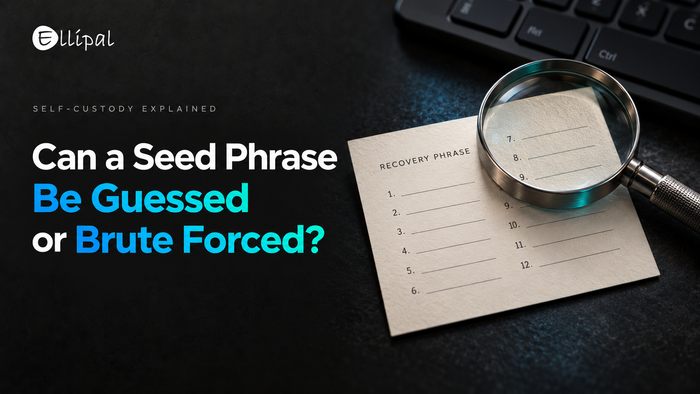
Can a Seed Phrase Be Guessed or Brute Forced?
A correctly generated BIP39 seed phrase carries 128 to 256 bits of entropy, far outside brute force range. Three documented failures since 2023 all...