


Main Takeaway: A bank safety deposit box is a reasonable off-site home for one copy of your seed phrase, the list of words that restores your wallet. Treat a bank vault as one storage location inside a wider backup plan, and keep it as one node among two or three copies. Check the access hours, the liability limits, and the inheritance process before you rely on it, and keep every copy offline.
Quick reference
| Term | What it means |
|---|---|
| Seed phrase (recovery phrase) | The 12 or 24 words that can restore your entire wallet on any compatible device. |
| Safety deposit box | A locked box rented inside a bank vault, reachable during the bank's opening hours. |
| Offline backup | A copy of your seed phrase kept on paper or metal, with no digital version anywhere. |
| Distributed backup | Two or three durable copies kept in physically separate locations. |
| Single point of failure | One location whose loss would lock you out of your funds. |
| Steel backup | A stamped or engraved metal plate that resists fire and water far better than paper. |
Can you store a seed phrase in a bank vault?
Yes. A bank safety deposit box works well as one copy inside a distributed backup, because a safety deposit box keeps a copy off your property and behind the bank's physical access controls. Storing a seed phrase this way removes several risks that pile up at home, from house fires to ordinary burglary.
A bank vault turns into a problem in two situations. The first is when the box holds your only copy, so a lost key, a closed branch, or a slow access process locks you out. The second is when the copy inside is a photo or a printout of a digital file, because the value of an offline backup disappears the moment the seed phrase has ever touched a connected device. A seed phrase that was generated and written down offline, then placed in a bank vault as one of several copies, is the setup that holds up.
What a bank safety deposit box protects, and what it does not
A bank safety deposit box protects a seed-phrase backup from the dangers concentrated in one household. A fire or flood that destroys a paper copy in a kitchen drawer does not reach a copy sitting in a vault across town. A break-in at your home does not open a box that needs your key and the bank's key together. Storing a copy off-site also separates the backup from the wallet itself, so a thief who takes the device does not also find the words that restore it.
A bank safety deposit box does not cover every scenario, and the gaps matter more for crypto than for jewelry or documents. Access runs on the bank's schedule, not yours, so the copy is available during opening hours rather than at 2 a.m. during a market event. The contents usually carry no bank insurance, and deposit insurance such as FDIC coverage applies to bank accounts rather than to the objects inside a box. Access can also be restricted by legal process or frozen after a death until an estate is settled, and the exact rules vary by bank and jurisdiction.
Access, liability, and inheritance: what to check first
Access is the first thing to confirm. A safety deposit box opens during branch hours, often on weekdays, and some banks require an appointment. That cadence suits a recovery backup you touch rarely, and it suits daily spending money poorly. Because a hardware wallet already lets you move funds without the seed phrase in hand, the limited hours rarely bite, as long as the vault copy is a backup rather than your working key.
Liability is the second thing to read. Many box rental agreements state that the bank does not insure the contents and does not accept responsibility for loss. Some homeowner or renter policies extend a small amount of off-premises coverage, though a seed phrase has no obvious cash value to an insurer and is hard to claim against. The practical takeaway is that the durability of the backup itself carries the weight, which is why a metal plate beats paper inside a vault.
Inheritance is the part most people skip. A box held in one name can be sealed on the holder's death and released only after probate, which can take months. Adding a co-renter, using a trust, or leaving clear written instructions with an estate plan keeps a heir from being locked out at the worst time. If a bank vault holds part of your recovery plan, write down who can reach it and how, and store that guidance the same careful way you store the words.
A bank vault is a location, not a backup method
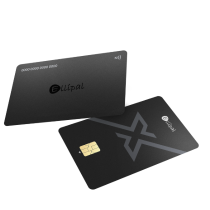
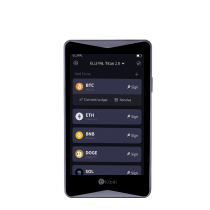
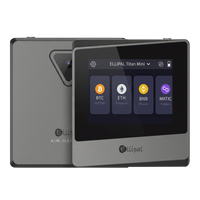
A bank vault decides where a backup lives. What the backup is made of, and how the seed phrase was created, are separate choices that matter just as much. The seed phrase should be generated offline, so no internet-connected device ever sees it, and the copy you carry to the vault should be a physical record you wrote by hand. The ELLIPAL Titan 2.0 is an air-gapped cold wallet that generates and stores keys offline and signs through QR codes, with no Wi-Fi, no Bluetooth, and no USB data connection. The ELLIPAL X Card is an NFC cold wallet that runs key generation on the separate offline X Card Starter, so setup stays off your phone.
The medium is where a vault copy quietly succeeds or fails. Paper fades, tears, and dissolves, and a decade in a humid box can leave words unreadable. A steel backup such as the ELLIPAL Seed Phrase Steel is made from 316 stainless steel and resists fire and water, so the copy you rarely check is still legible when you finally need it. Placed inside a bank vault, a metal backup pairs off-site security with a durable medium, which is the combination worth aiming for.
Where a bank vault fits among backup locations
| Location | Off-site from home | Access speed | Contents insured by the holder | Best role |
|---|---|---|---|---|
| Home safe | No | Anytime | Usually not | Primary copy you can reach quickly |
| Bank safety deposit box | Yes | Opening hours only | Typically not by the bank | Off-site second copy in durable metal |
| Trusted relative's home | Yes | Depends on distance | Usually not | Geographic third copy for resilience |
| Digital (cloud, photo, email) | Stored on servers | Instant | Not meaningfully | Not advisable for any copy |
Read across the rows rather than picking one winner. A common plan keeps one steel copy in a home safe, one in a bank safety deposit box, and one with a trusted relative, so no single event erases the seed phrase. The digital row stays on the list only as the option to avoid, because a copy on a phone, in cloud storage, or in an email is reachable by anyone who reaches that account.
The why: a backup survives when no single loss can erase it
Self-custody moves the job of protecting your crypto from a company to you, and the seed phrase is the master key behind that job. A single copy in a single place is fragile, because one fire, one flood, one theft, or one misplaced envelope can end access to the funds. The purpose of a distributed backup is to make sure that no single event and no single location can erase every copy at once.
A bank vault contributes exactly one property to that goal, which is off-site physical security, and it contributes nothing to the other two properties that matter. Durability comes from the medium, so metal outlasts paper. Secrecy comes from how the seed phrase was created and handled, so keys generated offline and written by hand stay off the networks where remote attackers operate. When you place a durable, offline-born backup into a bank vault as one node among several, the vault does the one thing it is good at while the rest of your plan covers the rest. For the broader question of how many copies to keep and where, the hardware wallet backup guide walks through the full setup.

Which approach fits you
- You hold a large, long-term position. A bank safety deposit box gives you an off-site copy on durable metal, kept apart from the device and from your home.
- You rent and have no safe at home. A vault copy plus one copy with a trusted relative can stand in for a home safe until you add one.
- You travel often or move between cities. An off-site copy stays put and legible while you and your devices are on the road.
- You live in a fire or flood zone. Geographic separation between copies matters most here, and a bank vault across town is a natural second location.
- You are planning inheritance. Document who can access the box and how, and pair the vault copy with a clear estate plan so an heir is not locked out.
- You mostly trade and hold little in cold storage. A single durable copy at home may be enough for now, and you can add a vault copy as the balance grows.
FAQ
Is it safe to store my seed phrase in a bank safety deposit box?
A bank safety deposit box is a sound place for one copy of a seed phrase, as part of a plan that keeps two or three copies in separate locations. A vault adds off-site physical security and distance from home risks. The weak setups are the ones that put the only copy in the box, or that store a digital record rather than a hand-written offline backup. Used as one durable, offline node, a bank vault strengthens the overall plan.
Are the contents of a safety deposit box insured?
Usually not by the bank. Most box rental agreements state that the bank does not insure the contents and does not accept liability for loss, and deposit insurance such as FDIC coverage applies to accounts rather than to items in a box. Some home insurance policies add limited off-premises coverage, though a seed phrase is difficult to value or claim. Because the box carries no reliable insurance, the durability of the backup medium is what protects you, which favors metal over paper.
Can the bank or the government open my safety deposit box?
Access can be restricted by legal process, and the specifics vary by country and by bank. A box can be sealed under a court order, and in some jurisdictions it is frozen after the holder's death until an estate is settled. Routine bank staff cannot browse your box, since opening it needs your key alongside the bank's. If legal access is a concern for your situation, ask the bank about its procedures before you rent, and plan your copies so one restricted box does not lock you out.
What happens to my seed phrase in a bank vault if I die or lose access?
Without planning, a box held in one name can be sealed on death and released only after probate, which may take months and leave heirs stranded. Losing the box key or forgetting the branch during a move creates a similar gap. The fixes are practical: keep a second copy elsewhere so the vault is not your only route, add a co-renter or a trust where it makes sense, and leave written instructions with your estate plan describing where copies are and how to reach them.
How much does a safety deposit box cost, and is it worth it?
Annual rental is modest at most banks and scales with box size, and some accounts include a small box at a discount. For a meaningful crypto position, that yearly cost buys an off-site, access-controlled home for one durable copy of the seed phrase, which is usually worth it. For small balances, a single steel copy in a home safe may be enough for now, and you can add a vault copy as your holdings grow.
Should a bank vault be the only place I keep my seed phrase?
No. A single location is a single point of failure, whether it is a bank vault, a home safe, or a relative's house. A bank vault covers off-site security well, and it still leaves you exposed if the box is your only copy and access is delayed, restricted, or lost. Keep two or three durable copies in separate places so that losing any one location does not lock you out of your funds.
Is paper or steel better for a copy kept in a bank vault?
Steel is the stronger choice for a copy you rarely check. Paper is fine for a short-term note, yet it fades, tears, and absorbs moisture, and a humid box over several years can leave the words hard to read. A steel backup such as the ELLIPAL Seed Phrase Steel uses 316 stainless steel and resists fire and water, so the copy stays legible when you finally open the box. In a vault you visit once a year, durability is the feature that earns its keep.
The trust layer
ELLIPAL has been on the market since 2018, with more than 1 million users across 140 or more countries. ELLIPAL wallets support 10,000 or more tokens across 45 or more blockchains, restore from a standard BIP39 and BIP44 seed phrase, and store keys inside a certified secure element. The ELLIPAL Seed Phrase Steel gives that seed phrase a durable offline home in 316 stainless steel that resists fire and water, whether it sits in a home safe or a bank vault. For the wider backup question of how many copies to keep, see the guide on how many backup copies of your seed phrase to make.
Own it. Then use it.
Security note: No self-custody setup removes every risk. Off-site storage and durable backups close significant categories of loss, but they do not eliminate physical, legal, inheritance, social-engineering, or user-error risks. Generate your seed phrase offline, keep every copy off connected devices, store durable copies in separate locations, do not share the words with anyone, and verify each transaction on your device screen. This article is general educational information about seed-phrase storage. It is not financial, investment, legal, or custodial advice, and account or box rules vary by bank and jurisdiction.