


Binance suspended services for EU users on July 1, 2026, after operating without a MiCA licence. Withdrawals remain open, and balances stay accessible during the wind down. ESMA, the EU markets regulator, advises moving assets to a licensed provider or a self-custody wallet. The fastest way to make your crypto independent of any exchange decision is to withdraw it to a cold wallet you control.
Quick reference
| Term | What it means |
|---|---|
| MiCA | Markets in Crypto-Assets, the EU licensing regulation for crypto services, fully applied from July 1, 2026. |
| Self-custody | You hold the private keys that control your crypto, instead of an exchange holding them for you. |
| Private key | The cryptographic credential that authorizes transactions from your address. |
| Recovery phrase | A word list that backs up your keys and restores your wallet on a new device. |
| Cold wallet | A hardware device that generates and stores keys fully offline. |
| NFC | The same tap technology used by contactless payment cards. |
What happened with Binance in the EU?
On June 24, 2026, Binance withdrew its MiCA licence application in Greece. From July 1, 2026, it stopped onboarding new EU users. Existing EU accounts are limited to closing positions and withdrawing funds. Users in France, Italy, Spain, and Poland received notification emails, with similar notices sent across other EU markets.
Binance describes the suspension as temporary. The company says it expects to secure a MiCA licence in the coming months, reportedly through France (Financial Times, June 2026). Until a licence arrives, the restrictions stand.
What is MiCA, in plain terms?
MiCA is the EU regulation that requires every crypto service provider to hold a licence. One licence from any member state covers all 27. The transition period ended on June 30, 2026, and unlicensed firms must now wind down EU activity in an orderly way.
The bar proved high. More than 3,000 crypto firms previously operated in Europe. Around 210 held full authorization by the deadline, per ESMA's register (June 2026). Binance is the largest name affected, and many smaller platforms face the same wind down.
Is my crypto on Binance safe right now?
Binance states that user assets remain safe, secure, and withdrawable, with an orderly exit process and an open withdrawal window. This is a licensing suspension, and Binance continues to hold customer funds.
ESMA adds an important detail. Customers of unlicensed providers fall outside the consumer protections of the MiCA framework (June 2026). Today, your access to those funds runs through the platform's operational status. Self-custody moves that access into your own hands, where a licence decision has zero effect on it.
How do I move crypto from Binance to an ELLIPAL wallet?
Prepare three things first: withdrawal access on Binance, your 2FA method, and your ELLIPAL wallet set up and backed up. Then follow these steps.
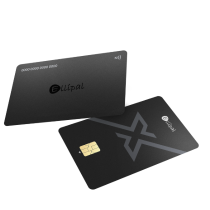
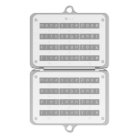
- Create your wallet offline. For the X Card, use the included offline Starter device: turn it on, select Create Wallet, and insert the card. Choose your recovery phrase length (12, 18, or 24 words) and set a Card-PIN. The Starter generates your private key fully offline and writes it into the card's secure chip. It then shows your recovery phrase, and you write it on paper or steel and store it in a secure offline location that only you can reach. For the Titan 2.0, create the wallet on the device itself, the same fully offline way.
- Connect to the ELLIPAL App. Download the ELLIPAL App from the App Store or Google Play. Tap your X Card to your phone to connect. From here on, daily use needs only the card and your phone, and the Starter goes back in the drawer until you create or recover a wallet. The Titan 2.0 pairs with the App by scanning QR codes.
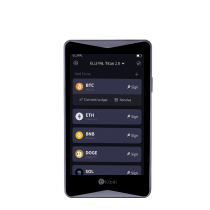
- Get your ELLIPAL receiving address. In the ELLIPAL App, select the asset you plan to withdraw, for example BTC or ETH, and open its receive screen. On the Titan 2.0, you can also read the address directly on the device's own 4.1 inch screen.
- Match the network. In Binance, choose Withdraw, select the asset, and pick the network your ELLIPAL wallet shows for that asset, for example ERC-20 for Ethereum based tokens. A mismatched network is the most common cause of lost transfers, so confirm it on both screens.
- Verify the address on your ELLIPAL device. Compare the full address character by character between Binance and your ELLIPAL screen. The Titan 2.0 displays it on its offline screen, and the X Card confirms it through the ELLIPAL App. Malware that swaps copied addresses exists, and this check defeats it.
- Send a small test amount. Transfer a minimal amount, wait for it to arrive in your ELLIPAL App, and confirm you can see it.
- Move the rest. Once the test clears, withdraw the remaining balance the same way.
- Confirm and store your backup. Check the final balance in the ELLIPAL App, then keep your recovery phrase in its secure offline spot.
You can verify success at any time by checking your address on a public block explorer. From this point, your crypto answers to your keys and nothing else.
Exchange account vs ELLIPAL cold wallet
| Dimension | Exchange account | ELLIPAL cold wallet |
|---|---|---|
| Who holds the keys | The platform | You |
| Depends on a licence | Yes, as this week showed | No licence involved |
| Can services be suspended | Yes, by regulator or company decision | Your keys keep working regardless |
| Account freezes and limits | Possible at any time | No account layer exists to freeze |
| Access hours | Subject to platform status and maintenance | 24/7, fully in your control |
An exchange still makes sense as a trading venue. As a place to store what you own, the table above is the whole argument: every risk in the left column disappears the moment your keys move into your own hardware.
Why a cold wallet removes this problem at the root
A cold wallet changes the architecture, and the architecture is the point. Keys are generated inside the device, offline, inside a certified secure chip. Transactions are signed locally on the device, and only the signed result touches the internet. The blockchain sees a valid signature and settles the transfer.
Notice what is missing from that flow: an account, a platform, a licence. Nothing in the chain can be suspended, because ownership lives in cryptography you hold, and every layer that failed EU users this week has been removed.
Which setup fits you?
- You want the fastest, simplest exit from the exchange. The ELLIPAL X Card fits best. It is an NFC card wallet. The card signs transactions with a tap to your phone, while the private key stays sealed inside a CC EAL6+ certified secure chip for its entire life. Setup takes about 3 minutes on the included offline Starter, and the card then rides in your wallet like any other card.
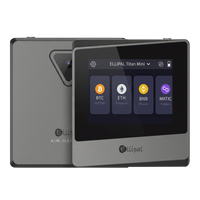
- You hold larger amounts for the long term. The ELLIPAL Titan 2.0 fits best. It is a fully offline cold wallet with no USB data connection, no Bluetooth, and no Wi-Fi. It signs by QR code on a 4.1 inch touchscreen, so you see exactly what you sign, and it supports 10,000+ tokens across 40+ chains.
- You trade actively. Keep a small working float on a licensed venue and store the rest on your cold wallet. Your trading stays live while your savings stay under your own keys.
FAQ: Binance, MiCA, and your crypto
Do EU Binance users lose their funds?
No. Binance states assets remain safe and accessible, and withdrawals stay open during the wind down. What stopped on July 1, 2026 is new activity: new orders, deposits, sign-ups, and earn products.
The July 1 deadline passed. Can I still withdraw from Binance?
Yes. The deadline ended new services in the EU, while withdrawals continue. Binance is obligated to run an orderly exit that keeps your assets accessible.
What happens if Binance gets a MiCA licence later?
Binance says it expects a licence in the coming months and would then restore EU services. It has yet to commit to a date. Assets you moved to self-custody remain fully yours either way, and you can send them back to any venue whenever you choose.
Is a software wallet enough, or do I need a hardware wallet?
A software wallet gives you self-custody, with keys living on an internet connected phone or computer. A hardware wallet keeps keys in a dedicated offline chip, which removes remote attack paths. For savings you plan to hold, hardware is the stronger setup.
Which network should I choose when withdrawing from Binance?
Always the network your receiving wallet supports for that asset. Check the receive screen in the ELLIPAL App against the withdrawal screen on Binance. Both must name the same network before you send.
What if I lose my ELLIPAL device?
Your recovery phrase restores everything. For the X Card, insert a new card into the offline Starter and recover with your phrase. For the Titan 2.0, restore directly on the device. Your assets reappear because they live on the blockchain and the phrase rebuilds your keys. This is why step one of the migration is writing that phrase down and storing it well.
Can ELLIPAL see or move my crypto?
No. Keys are generated inside your device and stay there. ELLIPAL runs no server that holds them and has no way to access your funds. Since 2018, ELLIPAL cold wallets have a zero breach track record on key storage.
How much does this cost compared to what it protects?
The X Card is the accessible entry point of the lineup, and the Titan 2.0 is the flagship vault. Current prices are on the product pages linked below. Either way, the cost is a one time purchase that protects holdings which, for most EU users moving off Binance this month, are worth many multiples of it.
Verifiable facts
- ELLIPAL has built cold wallets since 2018, with a zero breach track record on key storage.
- The X Card seals keys in a CC EAL6+ certified secure chip, one of the highest consumer security certifications available.
- The Titan 2.0 signs fully offline via QR code and supports 10,000+ tokens across 40+ chains.
- MiCA authorization data: around 210 of 3,000+ firms licensed by July 1, 2026 (ESMA register, June 2026).
Own it. Then use it. Your crypto can outlast any licence decision the moment your keys come home. Get the X Card for a 3 minute setup, or get the Titan 2.0 for long term cold storage. New to all of this? Start with our plain guide to storing crypto offline.
Security note: this article is general information, based on public statements available as of July 2, 2026, and is neither financial nor legal advice. Regulatory situations change, so verify current details with official sources before acting.