



Main Takeaway: If you lose your hardware wallet, your crypto is not lost with it. Your coins live on the blockchain, and the device only holds the keys that authorize them. As long as your recovery phrase is backed up, you can restore your wallet on a new device, and a PIN keeps whoever finds the lost one from getting in. Losing the device is an inconvenience, not a loss of funds.
Quick reference
| Term | What it means |
|---|---|
| Recovery phrase | The 12-24 words that can rebuild your wallet on any compatible device |
| PIN | The code that locks the device, so a finder cannot open it |
| BIP39 | The open standard that lets your recovery phrase restore on any compatible wallet |
| Restore | Rebuilding your wallet on a new device using your recovery phrase |
| Self-custody | You hold your own keys, so no company can freeze or release your funds |
Losing a hardware wallet feels like it should be a disaster, but most of the time it is an inconvenience rather than a loss of funds.
The worry makes sense. The device held your crypto, so losing it must mean losing the crypto. That is not how a hardware wallet actually works, and understanding why turns a moment of panic into a quick, recoverable situation.
This guide explains exactly what happens when your hardware wallet is lost, stolen, or broken, what protects you in each case, and how to get your wallet back.
What actually happens if you lose your hardware wallet?
If you lose your hardware wallet, your crypto stays on the blockchain and under your control, as long as your recovery phrase is backed up. The device holds keys, not coins.
A hardware wallet does not store your crypto inside it. Your coins exist as records on the blockchain. What the device holds is the private key that authorizes transactions from your addresses. Lose the device, and those addresses, along with their balances, are still on the blockchain, exactly where they were.
Two things then decide your outcome: whether your recovery phrase is backed up (so you can rebuild the keys elsewhere), and whether the lost device has a PIN (so a finder cannot use it). Get those two right, and a lost device is a replaceable object rather than a lost fortune.
The two things that decide your outcome
Almost every "lost wallet" situation comes down to these two factors.
| Factor | If you have it | If you don't |
|---|---|---|
| Recovery phrase backed up | Restore on a new device; your funds come back | This is the one case where funds can become unreachable |
| PIN on the device | A finder cannot open it; you have time to move funds to a new wallet | A finder could attempt access, though they still need to get past the PIN if one is set |
The takeaway: the device is replaceable, and your recovery phrase is the thing that actually needs protecting.
Why losing the device doesn't mean losing your crypto
It helps to picture where everything actually lives.
Your crypto is on the blockchain, a public ledger that exists across thousands of computers worldwide, not inside any single device. Your private key is the credential that lets you move what is recorded at your addresses. Your recovery phrase is a human-readable backup of that key. And your hardware wallet is simply the secure place that holds the key and signs with it.
So when the device goes missing, the key it held can be regenerated from your recovery phrase on a new device. Nothing about your balances on the blockchain changed.
Your hardware wallet is the key. The blockchain is the vault, and your recovery phrase opens it from any compatible device.
This is also why backing up the recovery phrase well matters more than protecting the device itself. The device can be replaced in a day. The recovery phrase is the one thing only you should hold.
How to recover your wallet on a new device
If you have your recovery phrase, restoring takes a few minutes:
- Get a new device. A new ELLIPAL, or any BIP39-compatible wallet, since you are not locked to one brand.
- Choose "restore" or "import wallet" during setup instead of creating a new one.
- Enter your recovery phrase on the device, offline.
- Your accounts and balances reappear. They were on the blockchain the whole time; the device just reconnects to them.
- If you think the lost device could be misused, move your funds to a freshly generated wallet afterward, for peace of mind.
Which situation sounds like yours?
- "I lost it, but I have my recovery phrase." You're fine. Restore on a new device and you're back in.
- "It was stolen." A PIN stands between a thief and your funds. Restore your wallet on a new device, and if you're concerned, move funds to a freshly generated wallet. On ELLIPAL Titan, the full-metal body is also designed to wipe its data if the device is physically forced open.
- "It broke or won't turn on." Hardware fails, but your funds remain on the blockchain. Restore on a new device with your recovery phrase.
- "I forgot my PIN." Your funds are safe. Reset the device and restore it using your recovery phrase.
- "I lost the device and the recovery phrase." This is the one genuinely difficult case, which is why a durable, separate backup of your phrase matters so much. See the backup guidance below.
- "I'm just worried someone will find it." A PIN keeps a finder out. If it still bothers you, move funds to a new wallet and treat the lost device as inert.
FAQ
What happens to my crypto if I lose my hardware wallet?
Nothing happens to the crypto itself. It stays on the blockchain. You restore access on a new device using your recovery phrase. The lost device is replaceable, and your recovery phrase is what gives you access.
Can someone steal my crypto if they find my wallet?
Not if a PIN is set. The device locks behind the PIN, so a finder cannot open it and approve transactions. For added protection, restore your wallet on a new device and move your funds to a fresh wallet.
How do I recover my wallet on a new device?
During setup, choose "restore" or "import," then enter your recovery phrase. Your accounts and balances reconnect from the blockchain. The process takes a few minutes.
Do I have to buy the same brand to recover?
No. ELLIPAL follows the BIP39 standard, so your recovery phrase restores on any BIP39-compatible wallet from any brand. You are not locked into one ecosystem.
What if I forgot my PIN?
Your funds are safe. A forgotten PIN is recoverable by resetting the device and restoring it with your recovery phrase. The same is not true for a lost recovery phrase that has no backup.
What if I lost my recovery phrase too?
If both the device and the recovery phrase are gone and you have no other backup, the funds can become unreachable. There is no central party who can restore them, because self-custody means only you hold the keys. This is why a durable, separate backup of your recovery phrase is the most important habit in self-custody.
Can ELLIPAL recover my wallet for me?
No. That is part of what self-custody means. Your keys are yours alone, and not even ELLIPAL can access them. Your recovery phrase is what restores your wallet, which is why keeping it safe and backed up is essential.
What happens if someone enters the wrong PIN on my lost device?
After a number of incorrect PIN attempts, the device is designed to wipe its stored data, so a finder cannot keep guessing indefinitely. Your funds remain recoverable from your backed-up recovery phrase.
Should I move my funds after recovering on a new device?
If the lost device had no PIN, or you simply want peace of mind, yes: restore on a new device and send your funds to a freshly generated wallet. If a PIN was set, this is optional rather than urgent.
The recovery layer
- Standard: BIP39/44, restorable on any compatible wallet from any brand
- Access control: PIN protection on the device
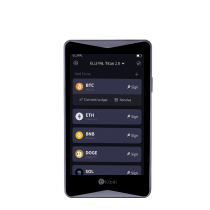
- Physical protection (Titan 2.0): full-metal sealed body designed to wipe data if forced open
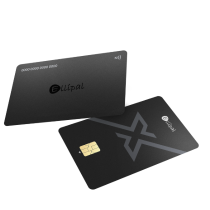
- Secure element: CC EAL5+ on Titan 2.0, CC EAL6+ on the X Card
- Track record: on the market since 2018, with more than 1 million users in more than 140 countries
A lost hardware wallet is a test of one thing: whether you backed up your recovery phrase. If you did, replacing the device is a minor errand. Order a new one, restore, and carry on. Your balances were on the blockchain throughout.
Own it. Then use it.
Protect your recovery before you need it
- Back it up to last: store your recovery phrase on a durable steel backup, kept separate from the device
- Plan for the people you care about: How to plan crypto inheritance
- Setting one up for family? How to set up a hardware wallet for a family member
Security note: No self-custody setup removes every risk. Recovery depends on having your recovery phrase backed up; if both your device and your phrase are lost with no other backup, funds may be unrecoverable. Store your recovery phrase on a durable offline backup kept separately from the device, set a PIN, do not share or digitally enter your recovery phrase, and buy hardware from an official source. This article is general educational information about wallet architecture. It is not financial, investment, or custodial advice.