

Why a cold wallet

Your crypto feels like yours. But is it, really?

On an exchange, in a hot wallet, behind a browser extension, someone else can still reach the keys. Here's why that matters, and how to fix it.

Where does your crypto actually live?

If it's in an exchange, a phone app, or a browser extension, it lives in a hot wallet: one that stays connected to the internet. That connection is what makes it easy to use every day.

It also means your keys live on a device that's always online, always exposed to risk.

And is it fully yours?

Owning crypto comes down to one thing: who holds the private keys. Not your keys, not your assets.
A hot wallet is handy for spending, but holding your own keys is what makes it truly yours, so protecting them is what matters most.

Real ownership is simpler than it sounds.

It just means keeping your keys somewhere the internet can't reach, so no app, no exchange, and no one else can move your crypto for you. Not even us.

That's what a cold wallet does. It keeps the keys offline, in your hands, and every move has to go through the device you hold.

But isn't a cold wallet inconvenient?

A cold wallet fits the way you live.

"Cold" doesn't mean locked in a drawer. In practice, self-custody usually shows up in one of two ways, often both at once.

Scenario 1 · on the go

Always with you, wherever life goes.

This is the part of crypto that travels with you. A trade on Friday. A send to a friend. Paying with a tap. Wherever you are, your crypto can be too.

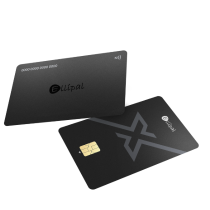
It fits between your debit card and your driver's license. Looks like a card, works with a tap to your phone.

The keys stay offline, but you'd never guess it from how it feels to use.

Scenario 2 · at home

For the holdings you protect for the long run.

This is for the crypto that matters most: the larger, long-term holdings you build over time. The Bitcoin you've held for years. The savings you're guarding for the future.

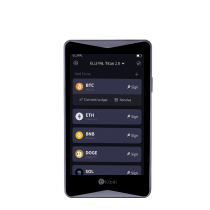
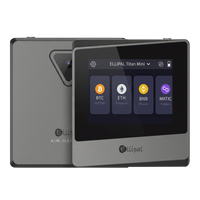
It sits in something built like a safe: a larger, dedicated device with no internet connection.

You sleep well because it stays protected whether you touch it once a year or once a week.

Find your fit

Two ways. Both yours.

The same self-custody. Choose the wallet that feels right for how you use your crypto.

Everyday / On-the-go

ELLIPAL X Card

The easiest NFC cold wallet.

  • NFC Tap to Sign
  • Ready in 3 Minutes
  • 100% Offline Setup
  • Carry It Anywhere
  • Import any Wallet
  • Built on an EAL6+ Secure Chip
Long-term / At home

ELLIPAL Titan 2.0

The world's first air-gapped crypto cold wallet.

  • Air-Gapped Tech
  • Clear Signing
  • Full Metal-Sealed Body
  • Easy to Use
  • Zero Breaches
  • Multiple Wallets Per Device
The other thing people assume

Safer, and you give up nothing.

The old trade-off was safety or convenience, pick one. That's over. A cold wallet does everything a hot wallet does. The only difference: your keys stay offline, and you approve every action yourself.

SwapThousands of tokens
Buy & sellOn and off ramp
Stake & earnYield on holdings
DiscoverStart with dApps
MarketTrack real-time prices
Stories from real owners

What real ownership actually felt like.

Three people, three different places in life, three reasons their crypto stayed theirs.

Lucia R. Buenos Aires · 27 · Graphic designer
First cold wallet, 2024

Lucia's overseas clients pay in USDT, and the peso loses value too fast to hold. By 2024 almost everything she'd earned sat on an exchange, and she knew that wasn't the same as having it. A friend told her to try a card-format wallet. It arrived in a week, set up on her phone in under five minutes, and she moved her savings off the exchange that same night.

"It was the first time my money felt like it was actually mine. Not a number on someone else's screen. Mine."
No experience needed · ownership you feel
Marcus M. Berlin · 47 · Software architect
Home vault, since 2023

Marcus went cold once his BTC stopped being an experiment and started being real savings. He set up a home vault, wrote the seed phrase on steel, and barely touched it for a year and a half. Then he went to move some BTC and couldn't remember his passphrase.A real person walked him through restoring from his steel backup and setting a new passphrase, week after week, without asking for his seed phrase or any sensitive detail, until he was back in.

"They just kept showing up, week after week, until I had my crypto back. There was no money in it for them."
Self-custody with a safety net
"K." Identity withheld · 36 · Hardware security researcher
Skeptic, since 2021

K. gets paid to break hardware, and his reaction to any offline claim is always the same: show me, don't tell me. So he pulled a Titan apart, traced the board, sniffed the QR protocol, verified the open QR data format, and hunted for the usual cheats: a hidden radio, a debug port, a weak random generator. He didn't find them. No radio, no electronic path in or out, keys sealed inside a certified secure element.

"Most wallets that claim to be offline aren't, really. This one is. That's a sentence I don't get to write often."
Genuinely offline, verified by a skeptic
The honest doubts before going cold

Questions worth asking.

Not anymore. If you can use a banking app, you can do this.

Setup runs on your phone, guided step by step. No cables, no jargon, no firmware to install by hand. A card-format wallet takes about 3 minutes, a full home vault around 20. The hardest part is deciding to start.

Yes, all of it. Offline keys, full access.

You can do everything you would with any wallet. When something needs signing, the request goes to the device in your hand, you approve it there, and it comes back. The keys work without ever leaving cold storage.

No. The crypto was never inside the device.

What lives on the device are the keys to reach your crypto, and you also hold those as a standard seed phrase. Lose or break the wallet, and you restore everything to a new one, ours or any compatible brand. The phrase belongs to you. That's the whole point.

No. Cold storage is a vault only you can open.

Move it, trade it, spend it, hold it, any time, in minutes. The only difference is that the device in your hand must approve every move, so an exchange freeze or a lost phone can't touch what's inside.

Own your crypto. Then use it.

Keep your keys where only you can reach them, and pick the cold wallet that fits how you live.